
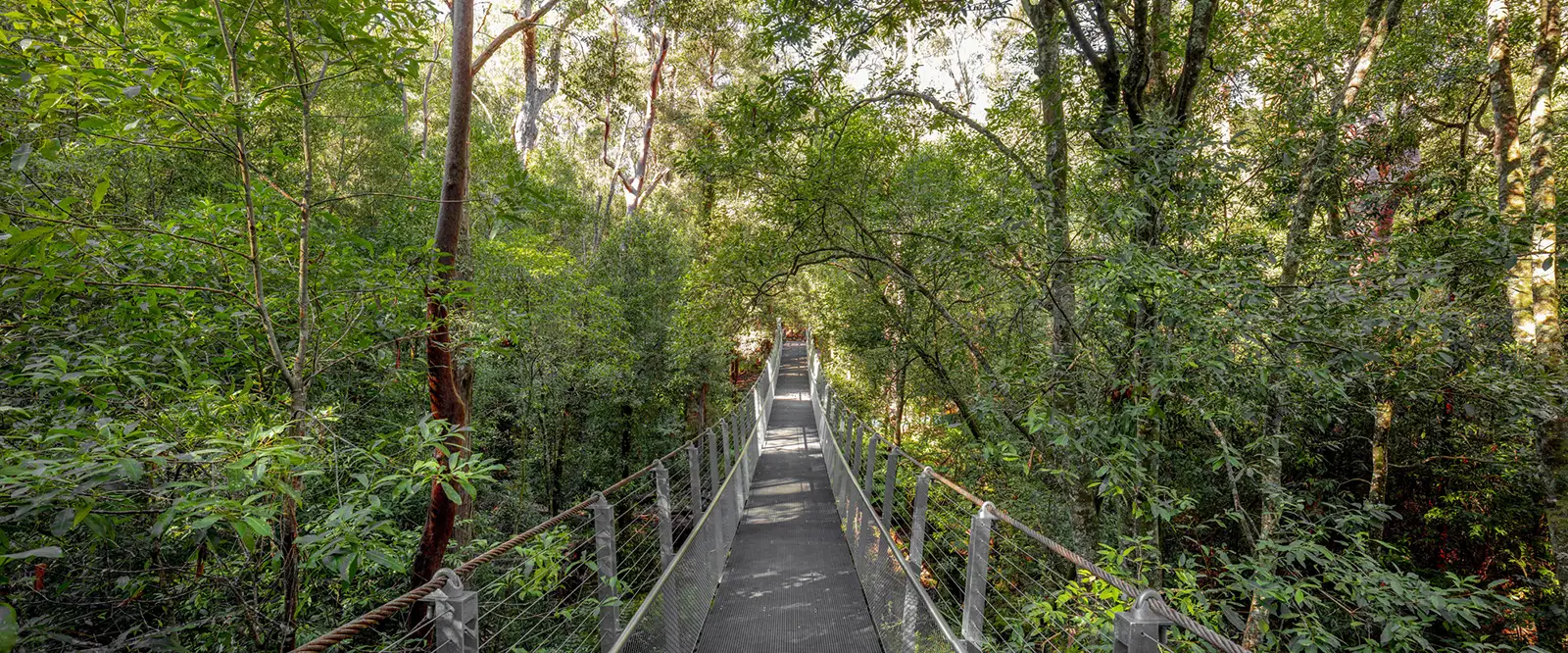
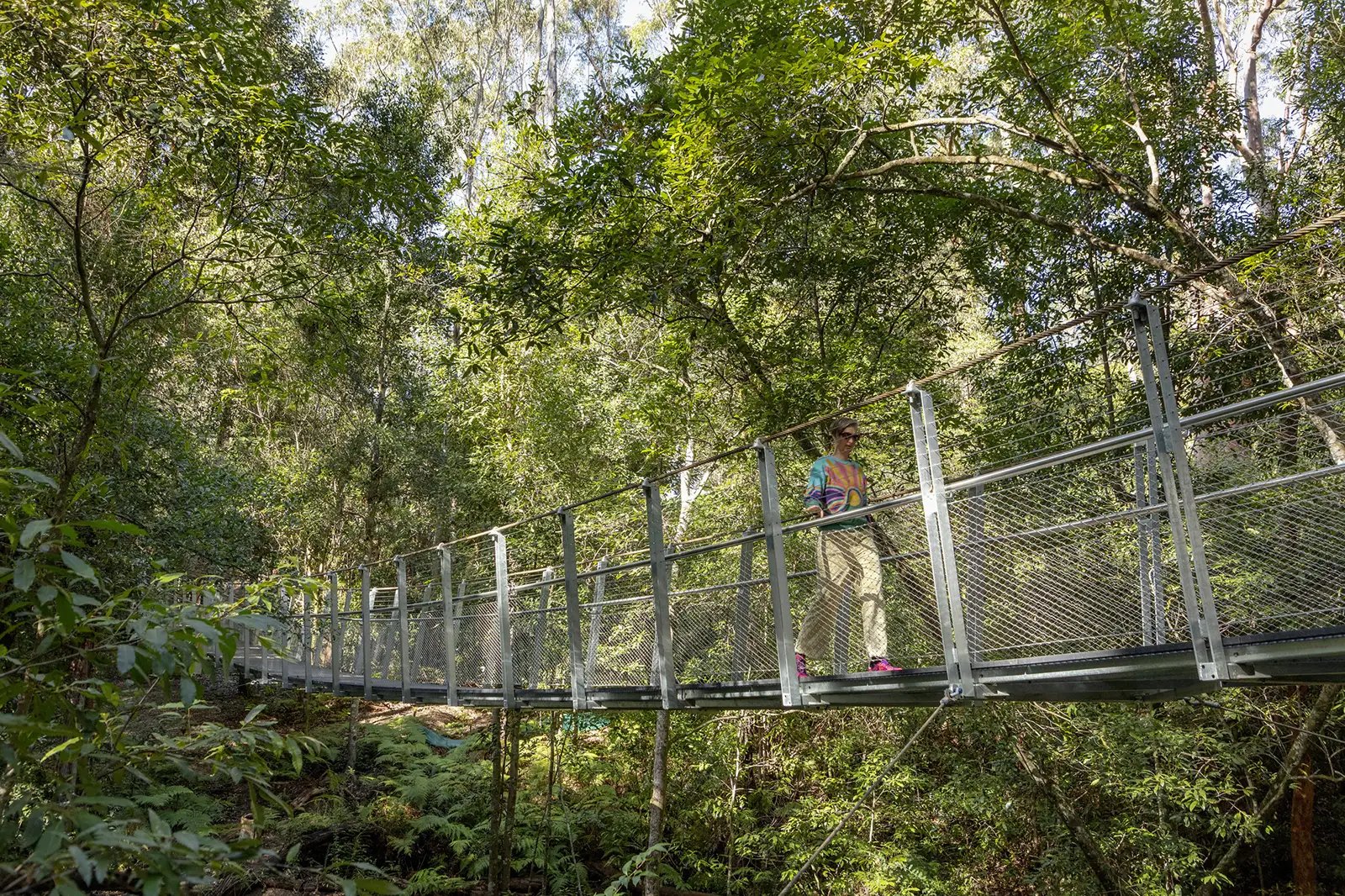
The Pyes Creek Swing Bridge was delivered for Hornsby Shire Council as part of the $250 million NSW Public Spaces Legacy Program. Located in a sensitive ecological corridor in northern Sydney, our brief was to design, manufacture and install a highly functional new pedestrian bridge across Pyes Creek, while causing minimal impact to the surrounding habitat and residents.
Sustainable Community Spaces - Case Studies
-
Dobroyd Head Walking Track
 Dobroyd Head Walking Track
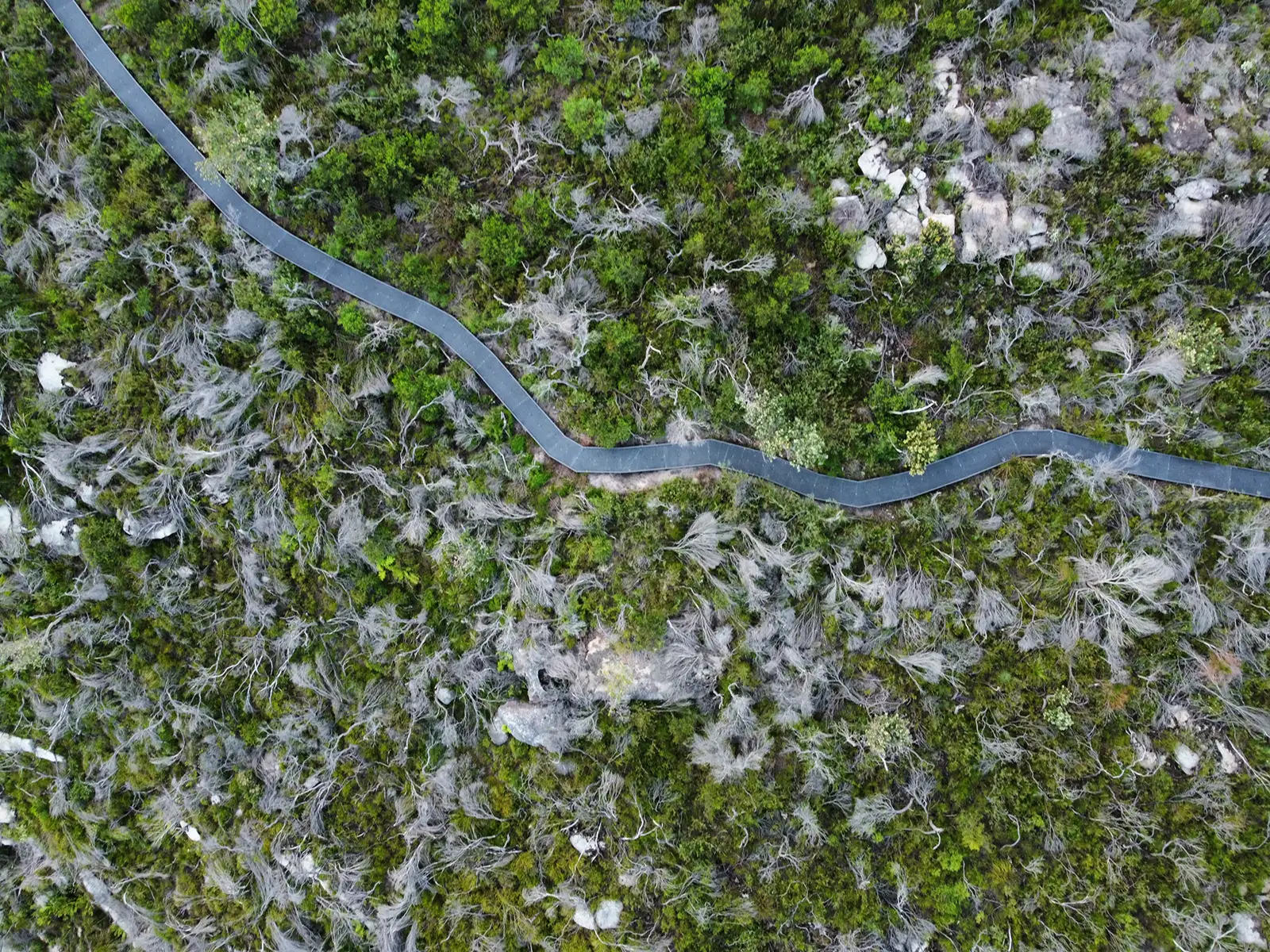
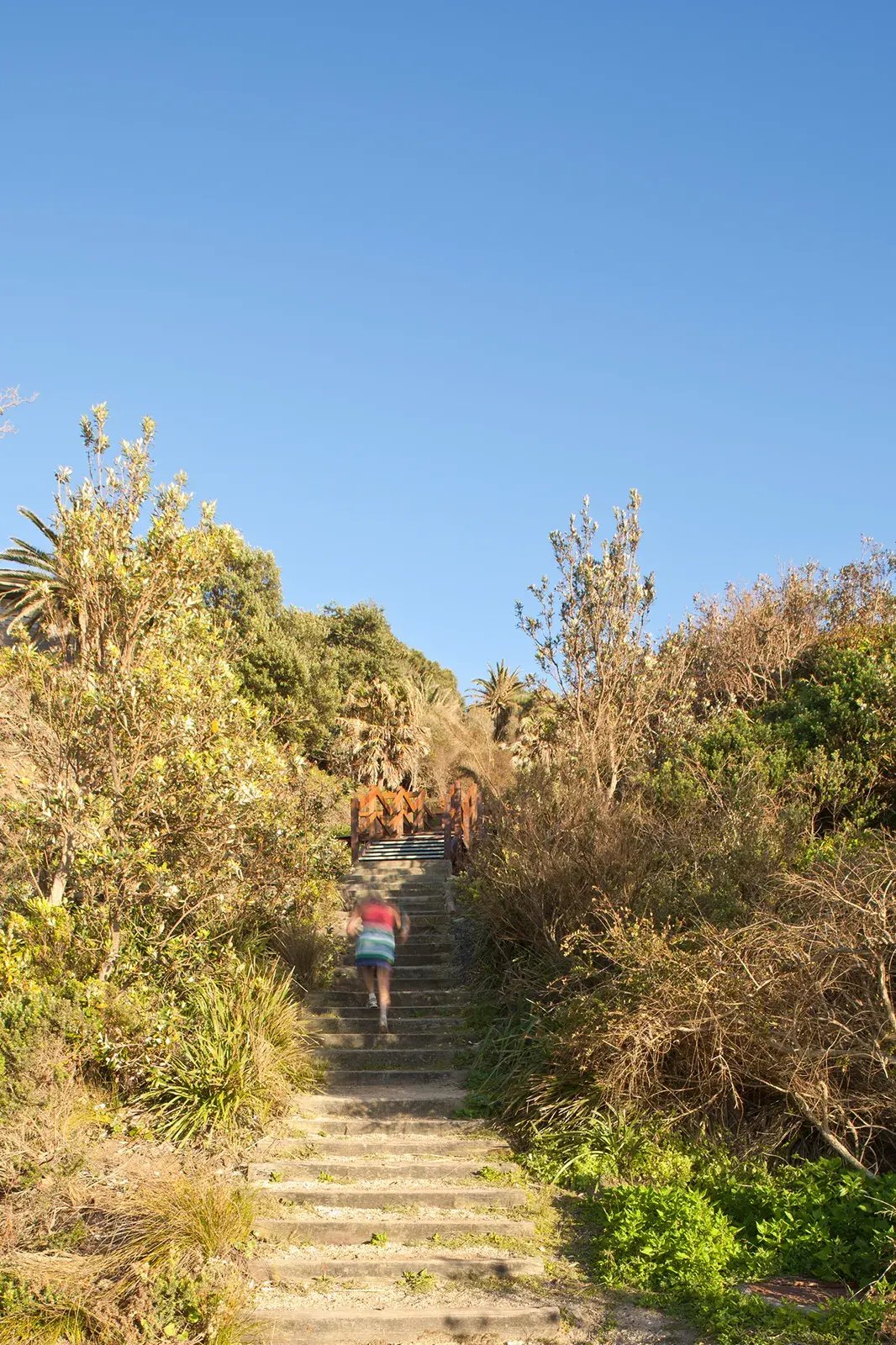
FORGE was appointed by National Parks & Wildlife Services to deliver crucial safety upgrades at three separate locations along the popular track in Sydney Harbour National Park, including two new boardwalks and a 6-metre timber footbridge. Given the site’s significant cultural and ecological sensitivities, there was a strong environmental aspect to the project, requiring detailed management plans both during and after construction.
-
Bokarina Wetland and Riparian Corridor
 Bokarina Wetland and Riparian Corridor
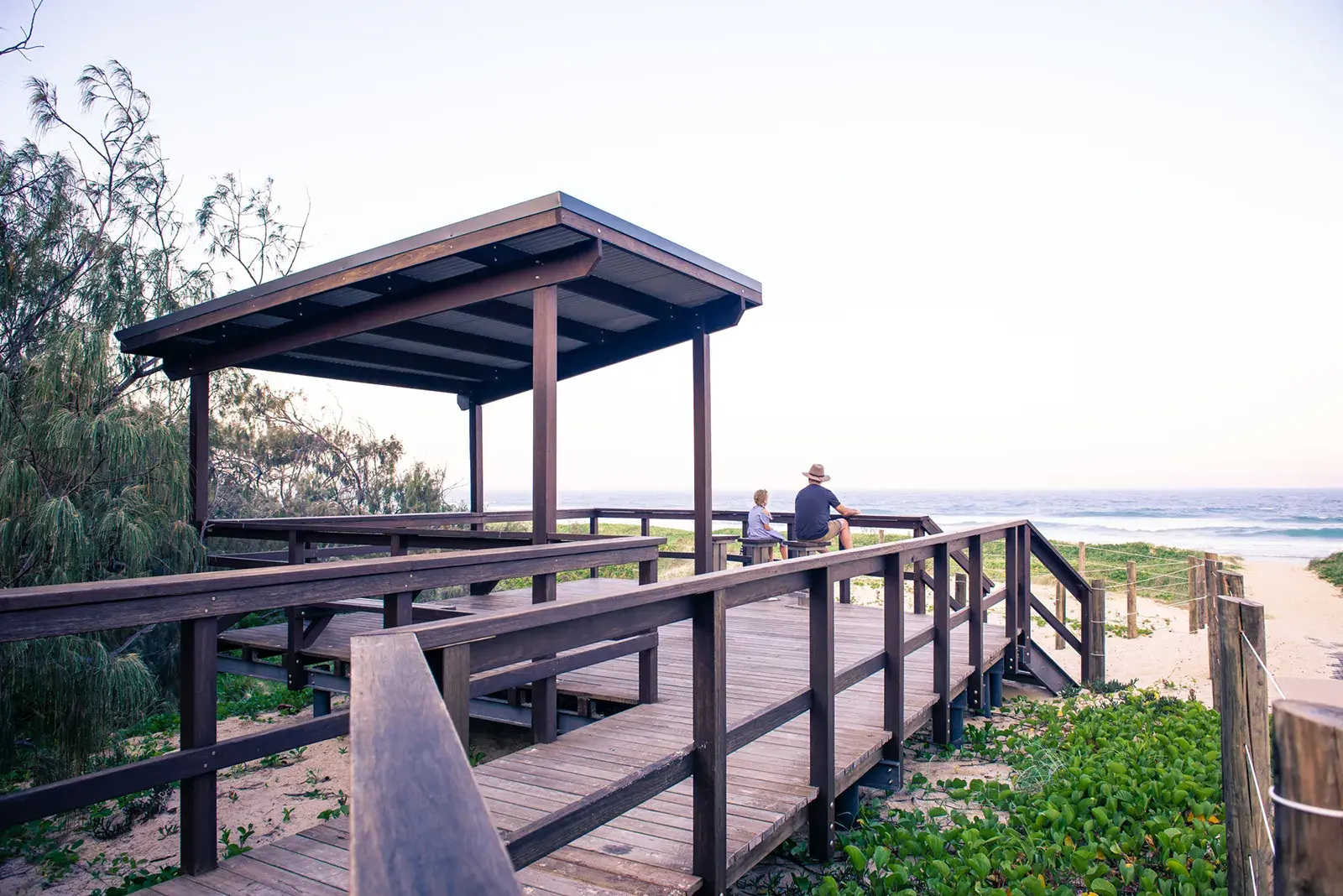
Stockland hand-selected FORGE to collaborate on the design and construction of an ecologically-sensitive wetlands boardwalk. Working closely with the project architects AECOM, we refined the original concept utilising a custom version of our BALMORALTM and MARSTM access systems, before providing detailed construction, materials selection and costing advice to maximise design life while minimising environmental impacts in the fragile and highly corrosive environment.
-
Sydenham Park
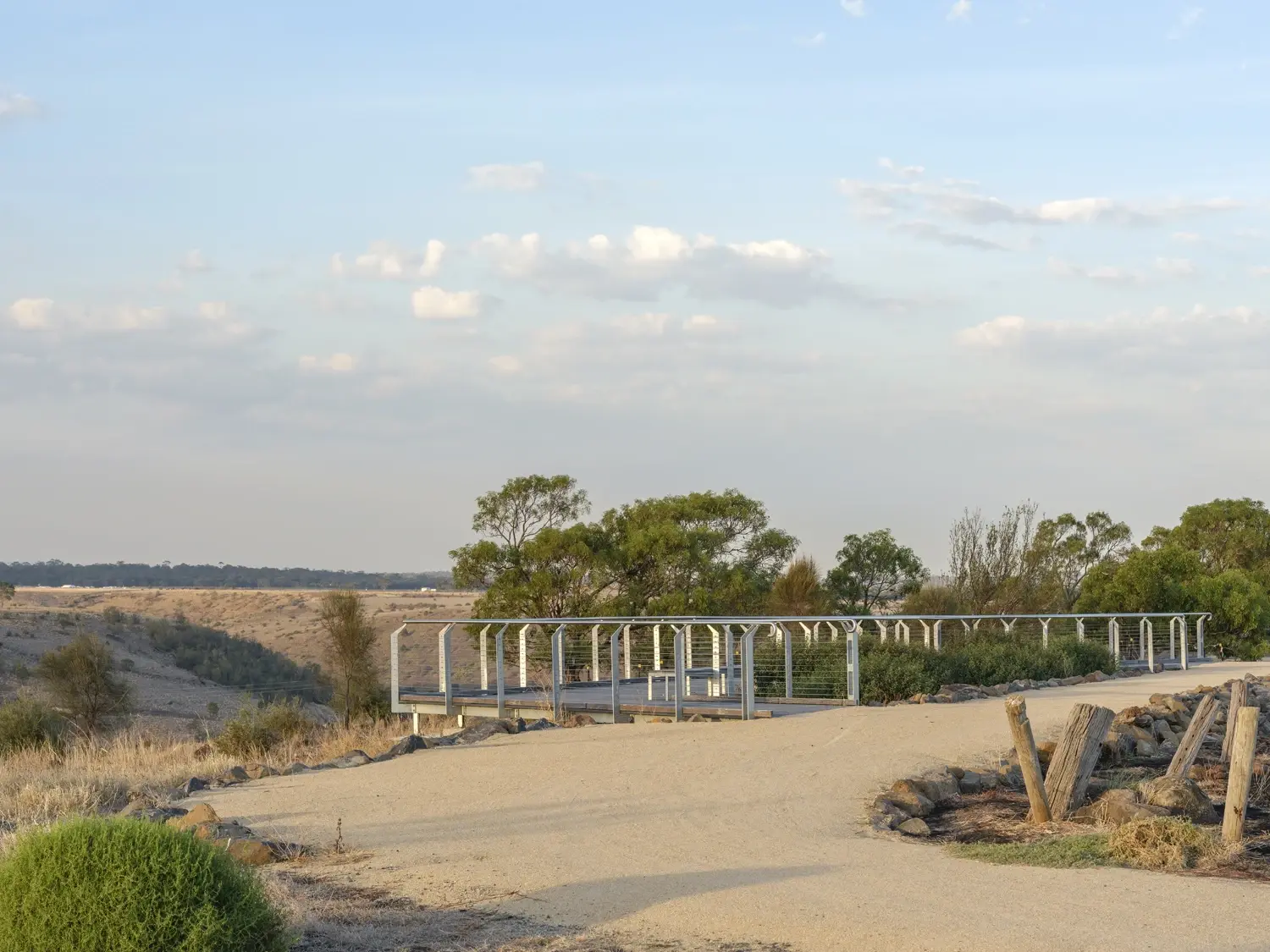 Sydenham Park
Brimbank City Council wanted to enhance recreational access for cyclists, pedestrians and joggers at Sydenham Park—but it was also essential to preserve the native skink population. FORGE was appointed to design, construct and install nine ‘wildlife’ boardwalks and a public viewing platform. The result was a network of lightweight, highly durable FRP-based structures that allows easy access for local residents, and safe passage for the local skinks and other small wildlife.
-
Little Bay Cove
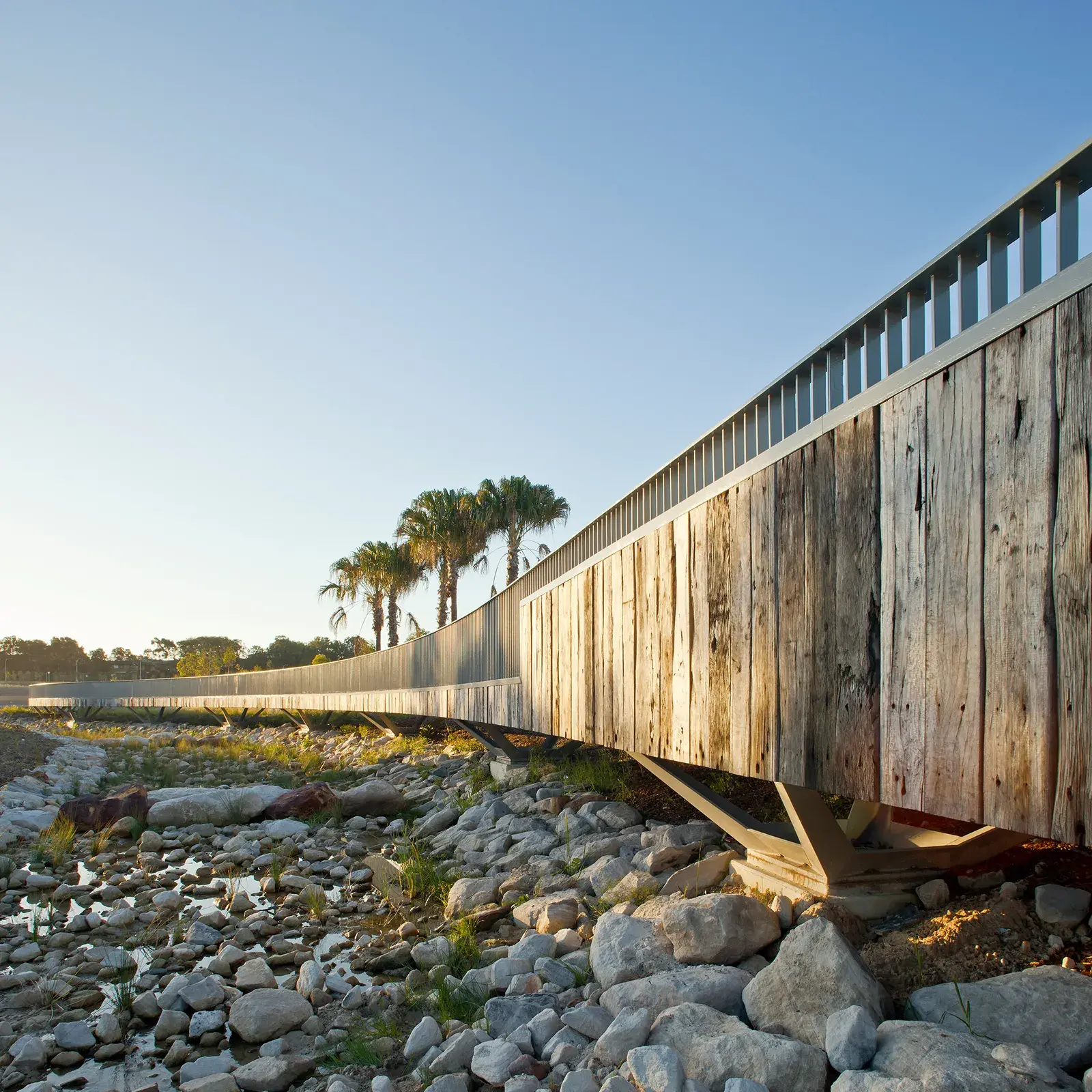 Little Bay Cove
Little Bay is home to southern Sydney’s last remaining deposits of Miocene clay and ochre, a sacred ceremonial clay used for centuries by the local Indigenous community. Working with architects McGregor Coxall, FORGE helped to future-proof the culturally significant area by designing, planning and constructing a network of sensitive pedestrian access infrastructure—allowing visitors to enjoy and move through the pristine area, without damaging it.
-
Ryde River Walk
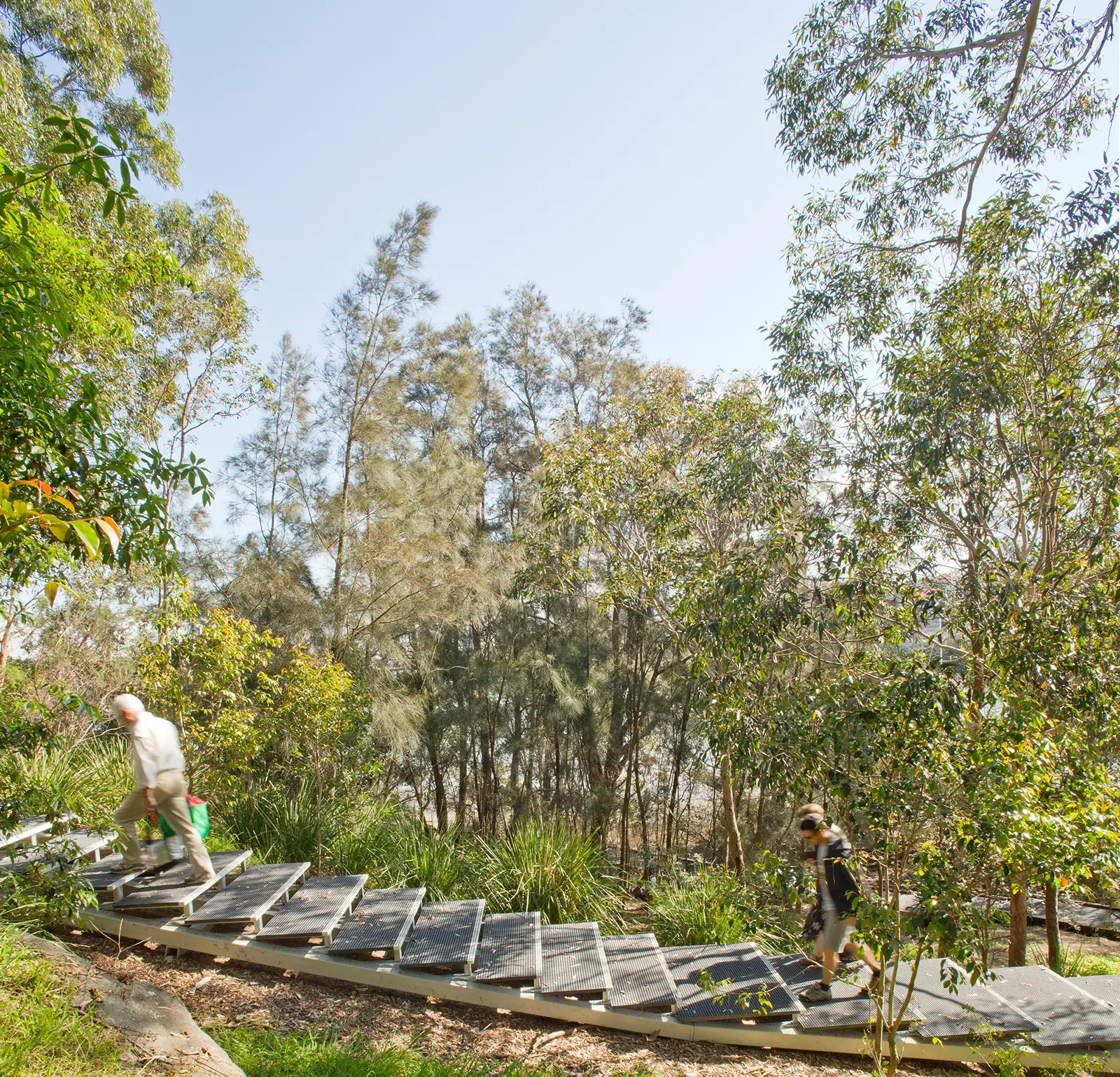 Ryde River Walk
City of Ryde appointed FORGE to upgrade multiple access points to the popular Ryde River Walk along the Parramatta River through the addition of several new boardwalks that connected directly with existing concrete paths. Using our proven MARSTM boardwalk system, FORGE designed, manufactured and installed the new structures whilst preserving the area’s pristine mangrove and marine habitats.
-
Caddens Rise Riparian Corridor
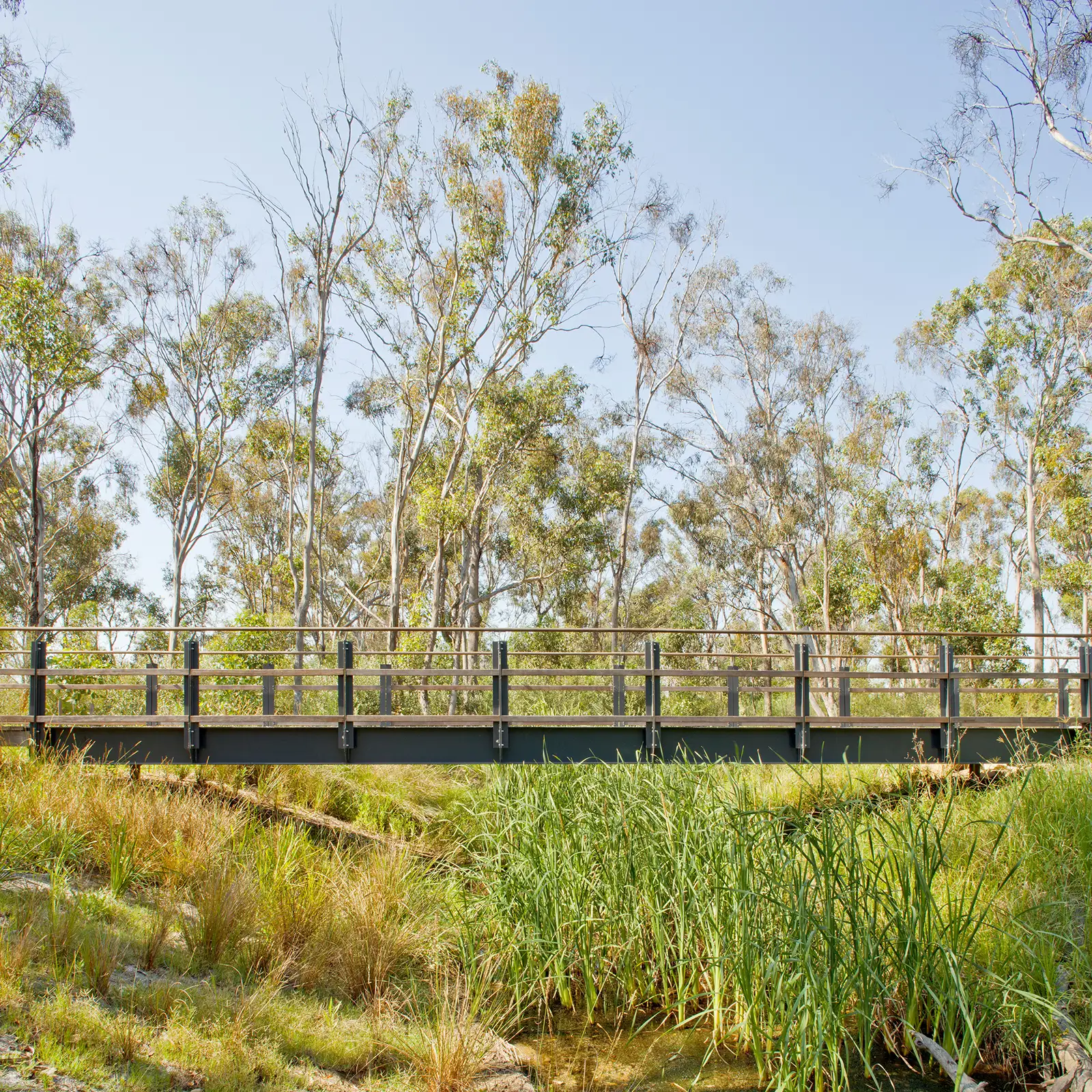 Caddens Rise Riparian Corridor In collaboration with PLACE Design, FORGE was selected by UrbanGrowth NSW to deliver a series of new community access structures at Caddens Rise in western Sydney. This included a 58-metre boardwalk, 6-metre bridge crossing and viewing platform within the sensitive riparian corridor. Cost-effectiveness was critical, as was delivering structures that were visually appealing whilst also preserving the native habitat.
Sustainability with FORGE
-
How does FORGE integrate sustainability into public infrastructure?
FORGE has extensive experience in delivering outdoor community structures that maximise environmental sustainability. From elevated wetlands boardwalks and bridges, to community viewing platforms and shade shelters, great care is taken to ensure every structure’s design and materials have the lightest possible environmental footprint while still meeting all functional and safety requirements of the project brief. The design also has a direct influence on the installation stage with steps taken to minimize, and often completely eliminate, the need for heavy machinery on site, reducing noise, emissions and habitat disruption. Specifying hard-wearing and lightweight materials can also significantly reduce the amount of future maintenance required.
-
What materials does FORGE use for low-impact design?
Typically the materials specified on a project are influenced by a range of factors including the overall creative vision, structural scale, location, site conditions, usage volume and budget. That said, at FORGE we always prioritise local and sustainably-sourced materials that are fit for purpose while having the least possible impact on the environment, including during installation. When specifying project materials the key characteristics we look for include light weight, high strength/durability, and low ongoing maintenance requirements. We also aim to minimise the use of carbon intensive materials such as concrete and plastics, while opting for recycled (and recyclable) options such as fibre-reinforced polymers and composites when appropriate.
-
Can FORGE help deliver climate-resilient outdoor structures?
Australia is a land of unforgiving and unpredictable weather conditions. This makes climate resilience a critical design consideration for any outdoor community structure and a key part of the FORGE Methodology. Seasonal wind and weather patterns. Soil conditions and acidity. Flood zones and 100-year high water levels. Sun mapping. Humidity and precipitation. These factors must all be taken into account and balanced carefully against the design vision and project budget to optimise the climate resilience of a structure’s design and materials, and deliver the maximum operational design life.
-
What is a sustainable community space?
FORGE believes sustainable community spaces are amongst Australia’s most valuable public assets. At a time when more and more homes have access to limited, if any, outdoor amenity, these shared public spaces deliver positive health, social and developmental outcomes for the individuals and families who use them—while also preserving the environments in which they exist. They promote the use of eco-friendly resources, foster social inclusion, support local economies and feature adaptable structures that combine high amenity with low-impact to ensure long-term resilience.
-
What are the key principles of green urban design applied by FORGE?
Every project is different and requires its own thinking in terms of sustainability and green urban design. That said, there are several core principles that guide the FORGE design approach for the majority of outdoor community structures we deliver for our clients each year. Rather than over-designing structures, which many contractors continue to be guilty of—we always seek to answer the project brief with clever solutions that minimise the structural footprint required, reducing both the embodied carbon of the structure itself and the amount of time required on site (and habitat disruptions) during construction. We specify local, natural and sustainably-sourced materials when appropriate and always embrace the opportunity to use recycled and repurposed materials. Our Methodology also prioritises the off-site pre-assembly of the main structural elements whenever possible, again further reducing environmental impacts on the site and surrounding habitat.
-
How does FORGE minimise environmental impact during construction?
Across all FORGE projects a key stage of the pre-construction process is to identify and mitigate any potential environmental risks long before construction begins. The project then proceeds through the design and delivery phases in adherence with strict environmental management plans and controls that have typically been developed in close consultation with all relevant government, community and cultural authorities.
-
Can FORGE design community spaces using recycled or reclaimed materials to reduce environmental impact?
When designed cleverly and planned effectively, using recycled or reclaimed materials can be a highly effective way to reduce the environmental impact of a community structure, while also sending strong sustainability and provenance messages to the wider community. From bridges and boardwalks to custom play spaces, FORGE has considerable experience at designing and constructing with recycled and repurposed materials. In some instances, such as Highlands Sustainable Park in Victoria, the materials have actually been sourced from the site itself, and would have otherwise have ended up in landfill.
Where We Work
-
Does FORGE deliver sustainable public infrastructure across Australia?
FORGE specialises in delivering sustainable public infrastructure projects in metropolitan, regional and remote areas in all states and territories including New South Wales, Victoria, Queensland, the ACT, South Australia, Western Australia and the Northern Territory. Our portfolio includes low-impact pedestrian bridges, swing bridges, elevated boardwalks and shade shelters in some of Australia’s most ecological sensitive areas including national parks and protected nature reserves.
-
Can FORGE work with local councils, landscape architects and developers on green urban design projects?
Every year FORGE works with LGAs, landscape architects, developers and other stakeholders across Australia to design and construct new green infrastructure projects. We also have decades of experience in delivering sustainably-focused upgrades and replacements for older community structures that are no longer safe or fit-for-purpose.
-
How do local conditions or council requirements influence sustainable design strategies?
Site conditions and council requirements play a significant role in the design of any community structure, particularly in terms of maximising design life and meeting all necessary sustainability benchmarks. The site and surrounding environment will typically have quite a direct influence on the overall type of structure recommended and can influence everything from size and height limits, footings, installation methodology, selection of materials and fittings, site access points and even working hours should there be local bird and wildlife that needs to be carefully protected. Essentially, every FORGE structure that we design and construct is fit-for-purpose.
-
Can FORGE construct eco-friendly outdoor structures in environmentally sensitive or protected areas?
FORGE has extensive experience in designing and constructing community infrastructure in environmentally sensitive and protected habitats. Great care is always taken to ensure the structure has the lightest possible environmental footprint and is able to be installed with little (or even no) use of machinery. Some of our most impressive projects were entirely constructed by hand, including manually-driven piles and materials that were carried to the site on foot.
FORGE Delivered
-
What is FORGE’s process for delivering a sustainable community space from design to completion?
The key to delivering sustainable community outcomes is collaboration, especially in the critical early design stages of a project. Guided by the FORGE Methodology, we aim to engage all stakeholders up-front to develop a deep understanding of the project’s design vision, environmental sensitivities and long-term sustainability goals. We then work together to identify the very best solution for the project brief, including sustainable materials and installation methodologies, long before you commit to a construction contract.
-
Can FORGE retrofit or upgrade existing outdoor spaces to improve sustainability?
Yes we can. While the optimal time to ensure the long-term sustainability of an outdoor structure is during its original design and construction, there are absolutely ways to enhance the sustainability credentials of many existing structures. This can be done through material and finish upgrades, clever design modifications and even the careful recycling of old or damaged components that require replacement.
-
How do FORGE’s sustainable designs contribute to community engagement and placemaking?
Sustainably-designed and delivered public structures offer unique opportunities to connect and engage local communities, while preserving local environments. When carefully planned and expertly delivered they are structures that serve an important functional purpose today and send a powerful message for the future. They become inter-generational public assets that residents and visitors can feel good about, fostering an enduring sense of community belonging and spirit.
-
How does FORGE ensure long-term durability and low maintenance of eco-friendly structures?
While it can be tempting to accept compromises in the face of tight budgets and timings, the future longevity of an outdoor community structure is directly linked to the up-front decisions made today. In particular, site-specific design and material selection is absolutely critical in maximising design life. It can also significantly reduce the amount of ongoing maintenance required. Accordingly, these decisions need to be guided by achieving the desired creative vision in way that is fit-for-purpose for the site and budget today, while also considering the future demands likely to be placed on the community and project stakeholders.
Related Projects
FORGE delivers sustainable and environmentally-sensitive community structures across Australia every year. Here are three more of our completed projects.
-
Aura Brook Bridges
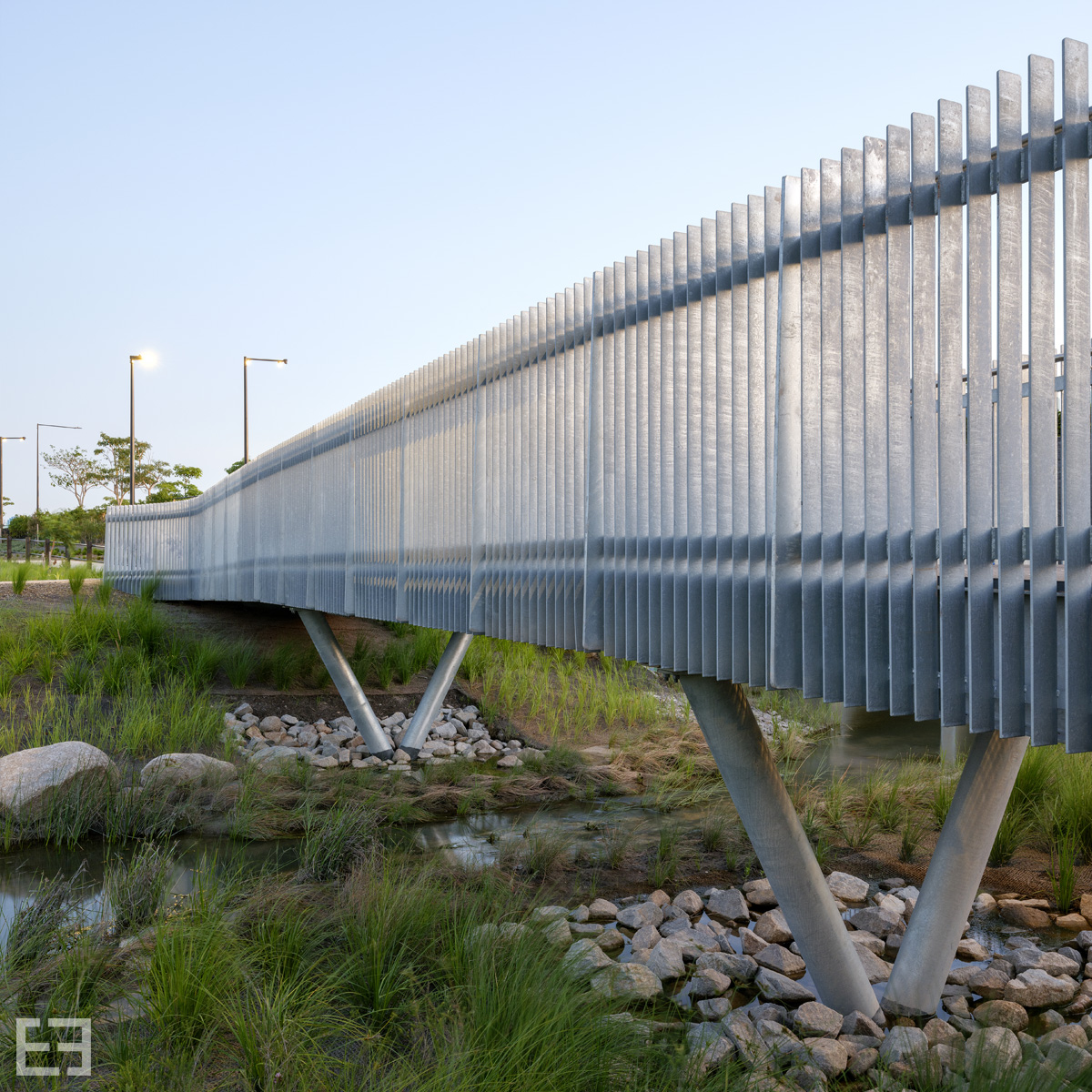
Aura Brook is a vast landscaped green space within the wider Aura residential estate, being developed by Stockland at the southern end of Queensland’s Sunshine Coast.
FORGE was engaged by the landscape contractor, Eureka Landscapes, to work with them detail, manufacture and deliver two new multi-span community bridges to provide safe and easy access for residents to explore the surrounding conservation areas.
-
Glen Innes Highlands Skywalk
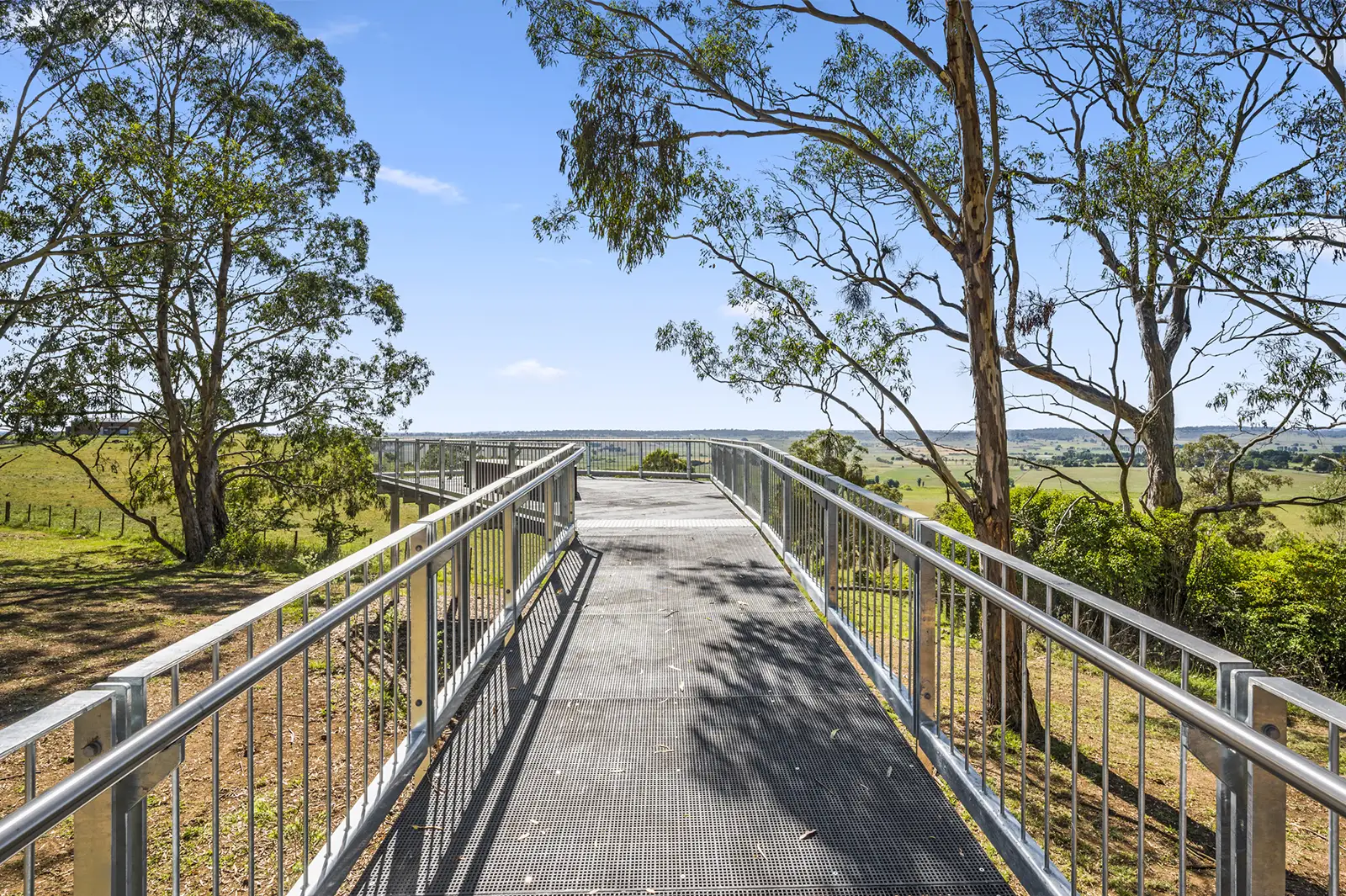
Glen Innes Severn Council was seeking to deliver a series of high-profile community infrastructure upgrades as part of its Centennial Parklands Master Concept Plan. FORGE was engaged to design and deliver one of the most anticipated new elements: a spectacular public ‘skywalk’ providing uninterrupted views of Glen Innes township and the picturesque Northern Tablelands.
-
Bilgola Beach
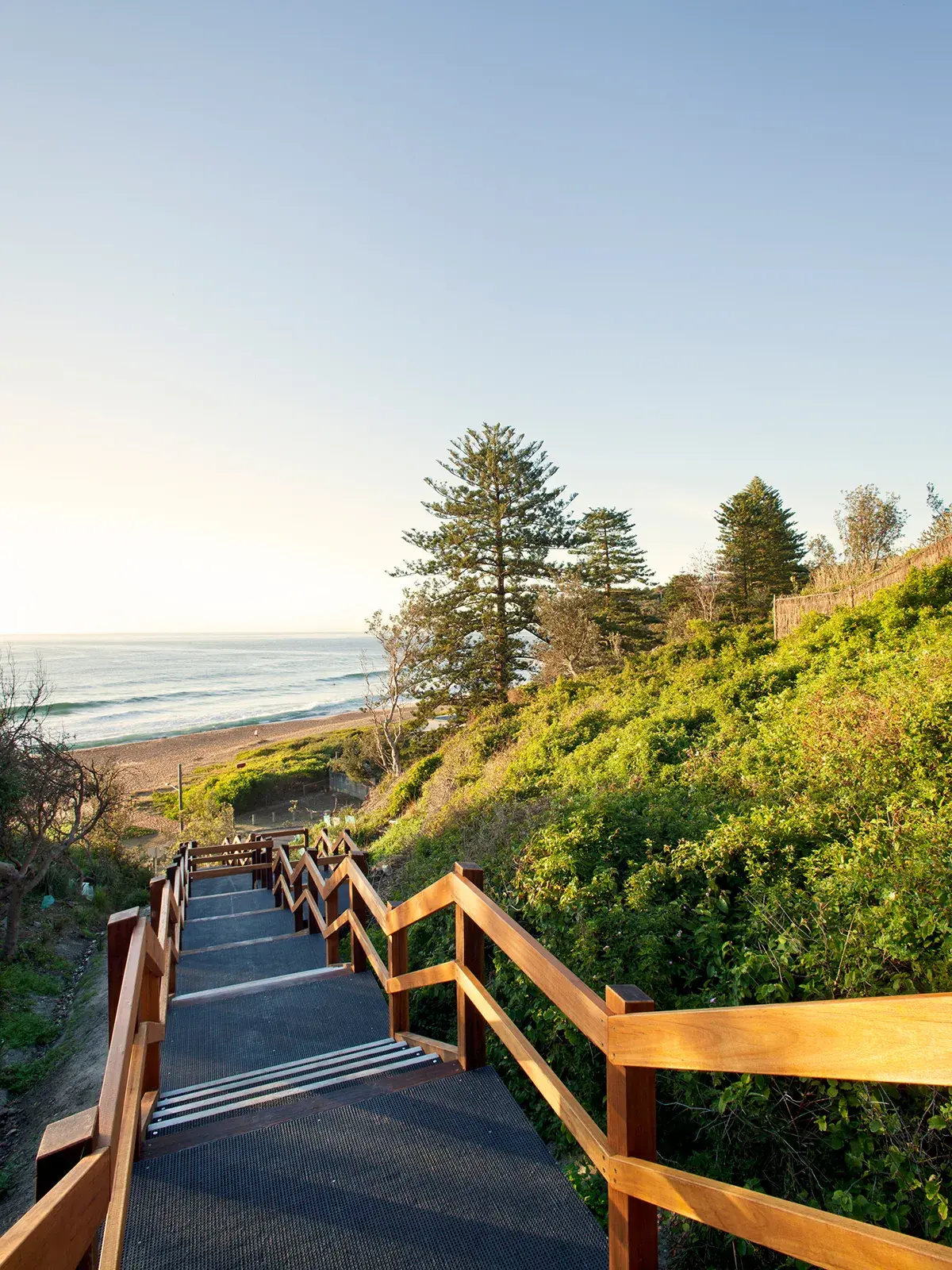
Nestled between Newport and Avalon, Northern Beaches Council appointed FORGE to restore safe access along a steep, narrow and heavily-used path leading down to Bilgola Beach.
Under the careful watch of local residents, the dangerous existing track was replaced in two stages, using an elegant and highly sustainable solution modified from FORGE’s off-the-shelf Vasey™ Stair System.
CONTACT US
Let’s Discuss
Your Project
Get in touch with our multidisciplinary team to start bringing your vision to life, unlocking the potential of your project and supporting your success every step of the way.
