
FORGE
Designing flood-resilient access structures
Best practice strategies to ensure pedestrian bridges, boardwalks and cycleways effectively withstand flooding events.
Designing for Flood Prone Areas
Flooding events present a major risk to pedestrian bridges, boardwalks and cycleways - all critical outdoor access structures that connect Australian communities. Given these structures are frequently used to provide safe passage across low-lying, riparian and remote natural habitats they can be highly susceptible to the elements including flood waters and debris loading. Calling upon decades of experience working with councils, landscape architects and developers, FORGE ensures these vital access structures are always designed, specified and installed to standards that can effectively withstand all site-specific risks associated with floodwater events in order to maximise community function, user safety and design life for generations to come.
Any stakeholder involved in the design, delivery and ongoing maintenance of pedestrian bridges, boardwalks and cycleways should be aware of the potential risks posed by flooding events. Councils, landscape architects, engineers, architects, developers, contractors and asset managers must always factor in such risks to ensure these vital access structures are able to withstand the impacts of flooding events in order to maximise safety for users and design life for asset owners, while also potentially mitigating any future legal exposure.
Designing flood-resilient pedestrian bridges, boardwalks and cycleways for Australian communities
Flooding events present one of the most significant structural risks facing pedestrian bridges, boardwalks and cycleways across Australia. As critical outdoor access links, these structures are routinely positioned across low-lying, riparian and remote natural habitats, environments where exposure to floodwaters is commonplace.
For councils, landscape architects, civil engineers and developers, designing flood-resilient structures isn't simply best practice, it’s a fundamental obligation to community safety, asset longevity and responsible land management.
Understanding the flood risk landscape
Australia’s climate variability means flooding events are increasing in both frequency and severity. FORGE brings over 50 years of expertise in delivering high-quality access structures spanning creek crossings, wetlands, coastal foreshore corridors, rivers and national park trails. They’re always designed and engineered to withstand site-specific forces, water velocity, debris loading, erosion and prolonged inundation.
Doing so is time well spent, as failure to account for these conditions during the initial design and specification phase of projects can lead to premature structural degradation, costly remediation and even risks to public safety.
The Australian Institute of Landscape Architects advocates for climate resilience integrated into outdoor infrastructure design, particularly for structures that interface directly with natural water systems such as creeks, rivers and other riparian environments. We couldn’t agree more.
Material and structural specification
Fit-for-purpose material selection is essential for any community access structure. Galvanised, painted or powder-coated steel, fibre-reinforced composites and treated Class 1 hardwood species rated for in-ground and in-water contact all offer varying degrees of corrosion and moisture resistance. Substructure design including pile depths, footing types and cross-bracing, must always be informed by geotechnical assessments specific to each site.
The Austroads Guideline for Flood Response and Recovery for Bridges provides a useful, nationally recognised framework for managing flood risk to bridge infrastructure including real-time monitoring during events and post-flood recovery protocols. This makes it an essential reference for landscape architects, engineers and other stakeholder specifying structures in flood-prone locations.
Maximising design life and community function
Structures designed without adequate flood resilience become liabilities. Regular inspection regimes, appropriate allowances above flood levels and the use of ‘open-deck’ profiles that allow debris and water to pass freely can all contribute to extending design life and reducing whole-of-life costs.
Unsurprisingly, Australian councils and asset managers are increasingly seeking flood modelling and hydraulic assessments as standard deliverables for any riparian or low-lying structure, reflecting the true cost of under-specifying outdoor access infrastructure.
When pedestrian bridges, boardwalks and cycleways are designed with flood resilience at their core, they deliver safe and enduring connections that serve Australian communities for generations to come. This is the outcome FORGE strives to achieve for every access structure it delivers.
Design considerations in flood-prone areas
Delivering pedestrian bridges, boardwalks and cycleways in flood-prone environments demands a truly holistic approach. Every element of the design and delivery process must account for the unique challenges presented by the site and wider project parameters, from initial design and material specification to long-term maintenance schedules.
Materials and connections must be specified to withstand repeated inundation, debris impact and prolonged moisture exposure. Designing for a 50-year-plus service life requires robust up front material selection, not expensive trouble-shooting afterwards.
Riparian and coastal environments are aggressive on bridges and boardwalks. Alkaline soils, tannin-rich waterways and saltwater exposure demand corrosion-resistant materials specified to match site-specific conditions. This can include hot-dip galvanising, marine-grade stainless fixings, composite decking and substructure elements and marine-grade coatings
Wet, shaded and frequently inundated surfaces present serious fall risks. Deck profiles and surface treatments must meet appropriate slip-resistance ratings for year-round conditions, including post-flood reinstatement periods when algae and sediment accumulation are at their highest.
Remote and riparian sites can be difficult to access for inspection and maintenance works. These structures should be designed to minimise maintenance frequency and simplify the tasks that are required, reducing both operational cost and the risk exposure of maintenance personnel working in challenging environments.
Upfront capital cost rarely tells the full story. FORGE strongly recommends whole-of-life cost modelling is used to inform all major specification decisions - factoring in ongoing maintenance, post-flood repairs and eventual replacement.
Flood-prone and ecologically sensitive sites often impose significant constraints on construction methodology, timing and access. Early contractor engagement and constructability reviews help avoid costly variations and site damage during delivery.
Every access structure must satisfy the relevant Australian Standards (these can typically include AS 5100, AS 2156 and AS 1428), council requirements, workplace health and safety legislation and all necessary environmental approvals - gaining these can add time to the delivery program and should be considered against the project timeline.
Materials
Understanding the strengths of different materials for access structures in flood-prone areas
When specifying pedestrian bridges, boardwalks and cycleways in flood-prone environments, the design and materials used will have far-reaching implications for performance, cost and longevity. Three main materials are used with each bringing its own advantages. Importantly FORGE has deep experience in working with them all, allowing us to help clients choose the right approach for every project.
1. Timber and Steel
Conventional timber and steel structures benefit from widespread contractor familiarity, competitive upfront costs and design flexibility across a range of spans and configurations. However they can require more ongoing maintenance. The advantages of using timber and steel include:
- Well-understood by builders and certifiers
- Readily available materials
- Easily adaptable to site-specific geometry
- Hardwood timber can offer a tactile ‘natural’ finish.
2. Fibre Reinforced Polymer (FRP) Composite Systems
FRP is a common alternative in flood-prone environments. Lightweight, modular and highly durable, composite systems are increasingly specified across Australian councils and developers. The advantages of FRP include:
- Excellent corrosion resistance and low maintenance requirements
- Lightweight for easier installation
- Modular nature supports construction with minimal ground disturbance
- Ideal for shorter-spans
3. Elevated prefabricated steel structures
Fully elevated prefabricated access structures offer the greatest clearance and structural resilience, making them ideal for sites expected to experience high flood velocities and debris loading. However they can typically more costly and complex to deliver. Their advantages include:
- Minimise flood interaction
- Strong long-term performance
- Ideal for longer spans
- Suitable for high water velocity crossings.
For any riparian and low-lying access applications in Australia, the right solution will always depend on site-specific conditions, span requirements and of course the project budget.
Whichever approach and materials are ultimately chosen for your project, the key to a successful outcome is early engagement with the project delivery specialists at FORGE.
Resilience
How FORGE ensures flood-resilient access structures
FORGE brings over 50 years of expertise in delivering high-quality access structures spanning creek crossings, rivers, wetlands, coastal foreshore corridors and national parks.
Our bridge and boardwalk solutions are always designed and engineered to withstand site-specific water velocity forces, debris loading, erosion and prolonged and repeated inundation.
By combining an experienced in-house team of passionate problem solvers with our early contractor engagement model, the FORGE MethodologyTM thoroughly explores, validates and resolves your concept from a cost, methodology and risk-informed mindset.
Our unique Design Scoping Package™ (DSPTM) service sits at the heart of this process, allowing potential risks to be identified early and carefully mitigated within the project budget through a collaborative approach to design, materiality and methodology development, typically long before work begins on site.
This process ensures maximum design clarity and confidence that the access structure you and your community expects is what gets delivered.
Projects
FORGE pedestrian bridges, boardwalks and cycleways are trusted to deliver safe and trouble-free community access in flood-prone regions across Australia.
- Dora Creek Pedestrian Bridge
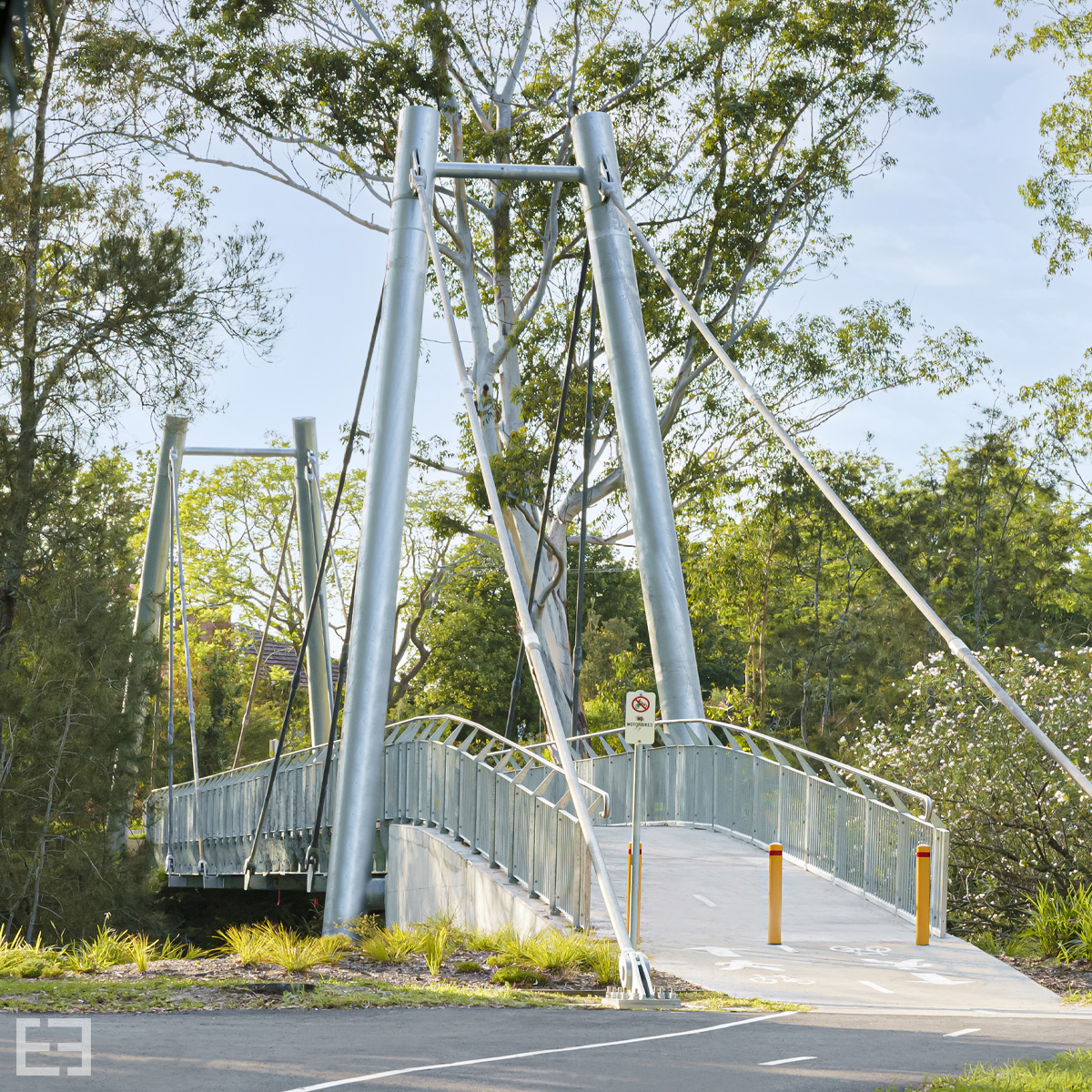
- Saltwater Creek Cycleway
- Aura Brook Bridges
- Smalls Creek White Gum
- Ryde River Walk
- Narrabeen Lagoon Trail
-
Dora Creek Pedestrian Bridge
Watagan Park is a major urban release near Cooranbong, 120km north of Sydney. As part of its approval for further expansion of the Watagan Park community, Lake Macquarie City Council required the developer, Johnson Property Group, to deliver a new 50-metre clear span pedestrian and cycling bridge across nearby Dora Creek.
-
Saltwater Creek Cycleway
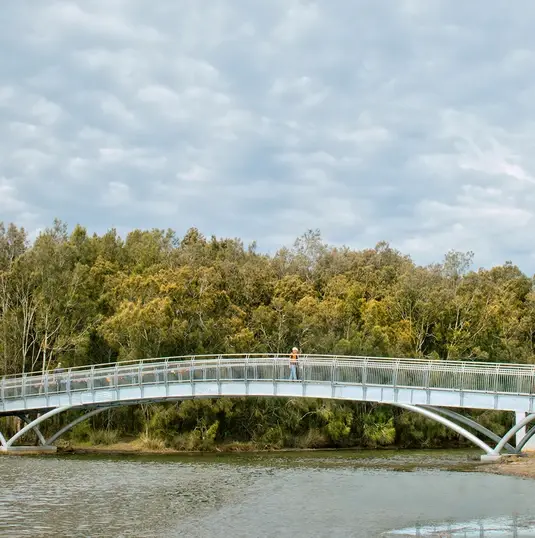
Saltwater Creek on the shores of Tuggerah Lake is one of the Central Coast’s favourite tourist spots. A sensitive mangrove habitat, the creek was also a natural obstacle on the busy walking track that connects Killarney Vale and Long Jetty, making an ecologically responsible pedestrian/cyclist bridge a much-needed piece of infrastructure for the Central Coast Council.
-
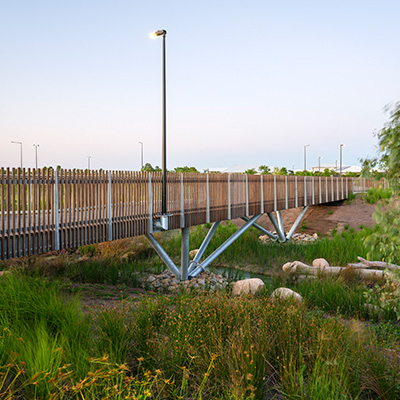
Aura Brook Bridges
Aura Brook is a vast landscaped green space within the wider Aura residential estate, being developed by Stockland at the southern end of Queensland’s Sunshine Coast.
FORGE (formerly Fleetwood Urban) was engaged by the landscape contractor, Eureka Landscapes, to work with them detail, manufacture and deliver two new multi-span community bridges to provide safe and easy access for residents to explore the surrounding conservation areas. -
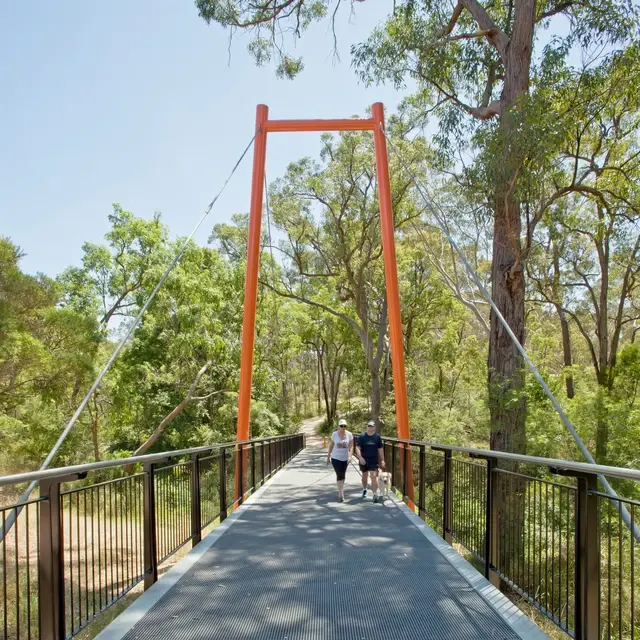
Smalls Creek White Gum
Hills Shire Council wanted to improve community access through local bushland at Kellyville North in Sydney’s north-west.
Following an open tender, FORGE (formerly Fleetwood Urban) was appointed as the lead contractor to deliver concrete approach paths and a new cable-stayed pedestrian and cycling bridge across Smalls Creek, based on our Stirling bridge system. -
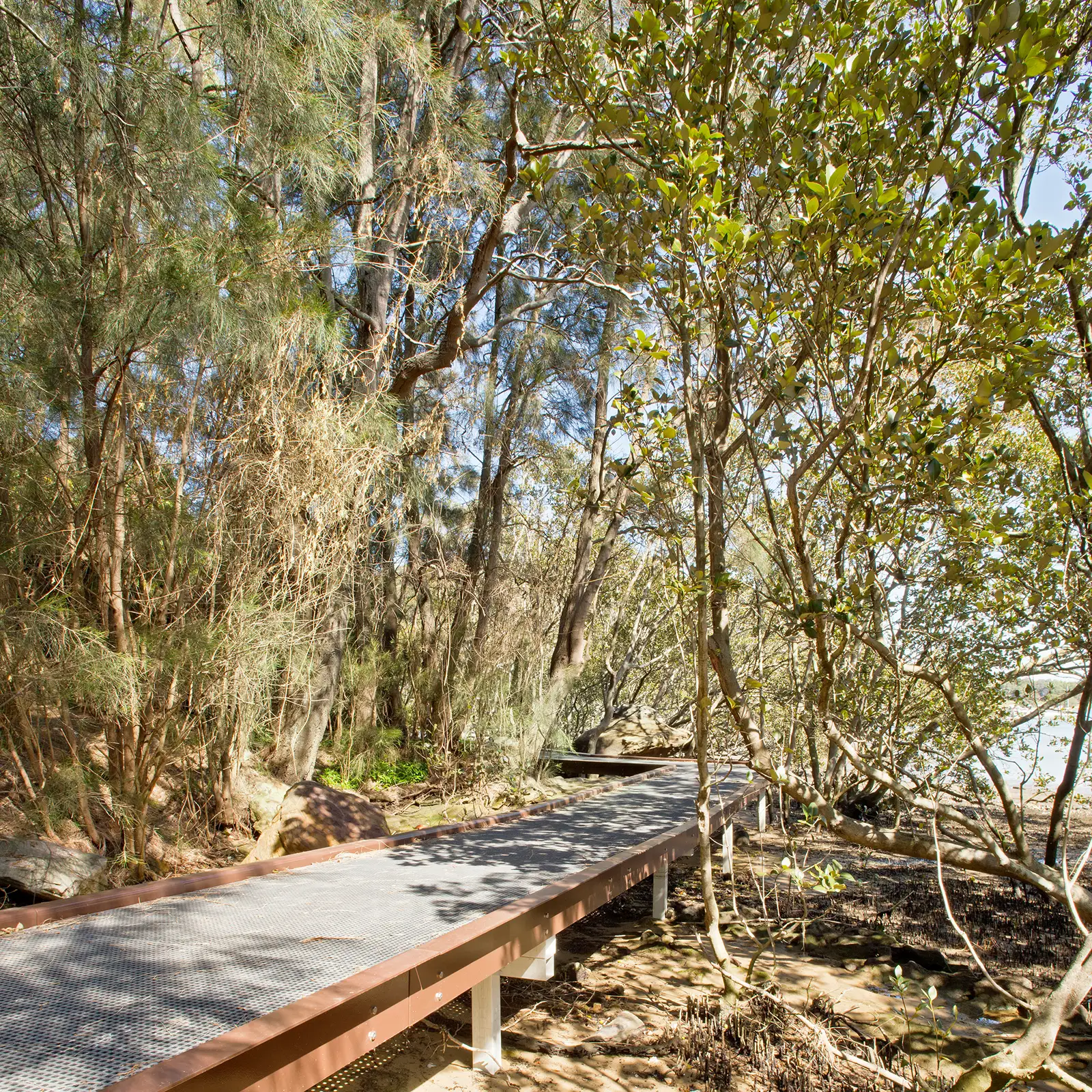
Ryde River Walk
Stretching 10km from end to end, the Ryde River Walk is a popular pedestrian and cycle route following the Parramatta River from Gladesville Bridge to Ryde Bridge in Sydney.
FORGE (formerly Fleetwood Urban) was engaged by the project’s landscape contractor following a successful tender to the City of Ryde Council, who was looking to upgrade access to the Walk and provide a more seamless journey through the addition of several new boardwalk sections that connected directly with existing concrete paths. -
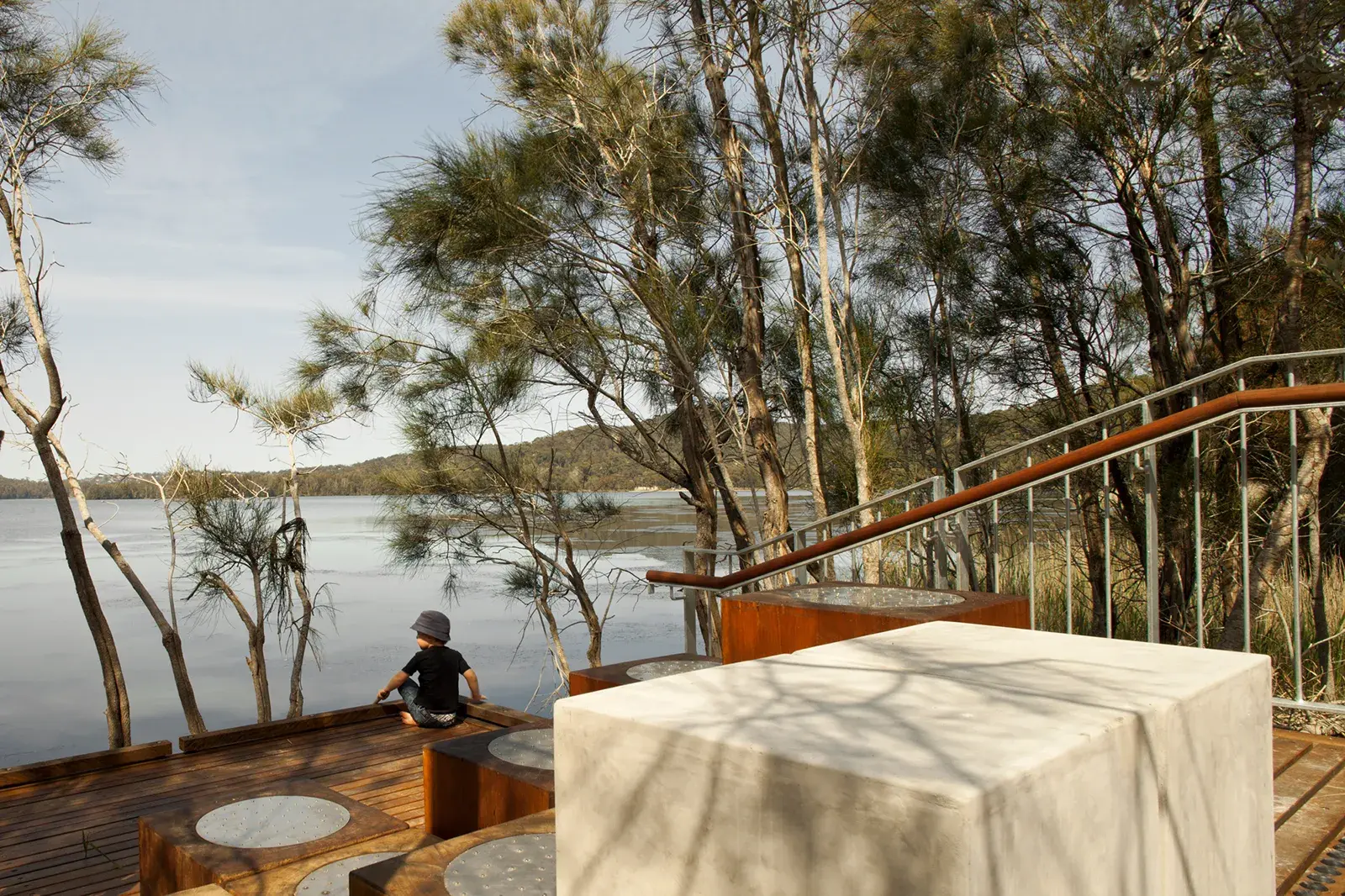
Narrabeen Lagoon Trail
The Narrabeen Lagoon Trail is a high profile shared pathway on Sydney’s northern beaches. It weaves its way through a beautiful, but environmentally sensitive, habitat on the fringes of one of Australia’s most populous and affluent residential regions.
FORGE (formerly Fleetwood Urban) won a competitive tender with Northern Beaches Council (formerly Warringah Council) to complete the 850 metre first stage of the trail’s upgrade, including marine piling, elevated boardwalks, stairs, lookouts, custom furniture and landscaping.
Your Questions Answered
FAQ
FAQ
-
How does FORGE deliver climate-resilient access structures?
Australia is a land of unforgiving and unpredictable weather conditions. This makes climate resilience a critical design consideration for any outdoor community structure and a key part of the FORGE MethodologyTM. Seasonal wind and weather patterns. Soil conditions and acidity. Flood zones and 100-year high water levels. Humidity and precipitation. Together with understanding all relevant Australian standards, these factors must be taken into account and balanced carefully against the design vision and project budget to optimise the climate resilience of a structure’s design and materials, and deliver the maximum operational design life.
-
Can FORGE minimise environmental impact during construction?
Across all FORGE access projects a key stage of the pre-construction process is to identify and mitigate any potential environmental risks long before construction begins. The project then proceeds through the design and delivery phases in adherence with strict environmental management plans and controls that have typically been developed in close consultation with all relevant government, community and cultural authorities.
-
Does FORGE deliver sustainable access infrastructure across Australia?
Yes, FORGE specialises in delivering sustainable public infrastructure projects in metropolitan, regional and remote areas across New South Wales, Victoria, Queensland, the ACT, South Australia and Western Australia. Our portfolio includes low-impact pedestrian bridges, swing bridges and elevated boardwalks in some of Australia’s most ecological sensitive areas including national parks and protected nature reserves.
-
How do local conditions or council requirements influence design strategies?
Site conditions and council requirements play a significant role in the design of any community structure, particularly in terms of maximising design life and meeting all necessary sustainability benchmarks. The site and surrounding environment will typically have quite a direct influence on the overall type of structure recommended and can influence everything from size and height limits, footings, installation methodology, selection of materials and fittings, site access points and even working hours should there be local wildlife that needs to be carefully protected. It’s essentially that every structure is fit-for-purpose and meets all relevant Australian standards.
-
Can FORGE construct eco-friendly access structures in environmentally sensitive or protected areas?
FORGE has extensive experience in designing and constructing fit-for-purpose bridges and boardwalks in environmentally sensitive and protected habitats. Great care is always taken to ensure the structure has the lightest possible environmental footprint and is able to be installed with little (or even no) use of machinery. Some of our most impressive projects were entirely constructed by hand, including manually-driven piles and materials that were carried to the site on foot.
-
What materials does FORGE recommend using for access structures in flood-prone areas?
When delivering pedestrian bridges, boardwalks and cycleways in flood-prone environments, the materials used will have far-reaching implications for performance, cost and longevity. Every structure needs to be specified with materials that are fit-for-purpose in line with Australian standards, considering the unique requirements of the site and the structure itself. FORGE works with a wide range of materials each year. For many riparian and low-lying access applications we find fibre reinforced polymer (FRP) composite systems represent a strong balance of whole-of-life performance, maintainability and environmental sensitivity. For sites with flood-prone high velocity crossings galvanised steel is frequently the most suitable option. But again, every project needs to be specified on its unique merits.
Our access team.
FORGE is an Australian leader in the design and delivery of flood-resilient access structures. Guided by a collaborative approach that blends aesthetic form with value-driven function - while reducing risk at every project stage - we partner with councils, landscape architects and developers to deliver high quality, fit-for-purpose bridges and boardwalks that stand the test of time for local communities.
Contact
To discuss your upcoming boardwalk project with the specialist FORGE access team, please get in touch today.