
FORGE
Specifying FRP boardwalks for Australian conditions
Things to know about fibre reinforced polymer (FRP) when designing community access structures.
Fibre reinforced polymer (FRP)
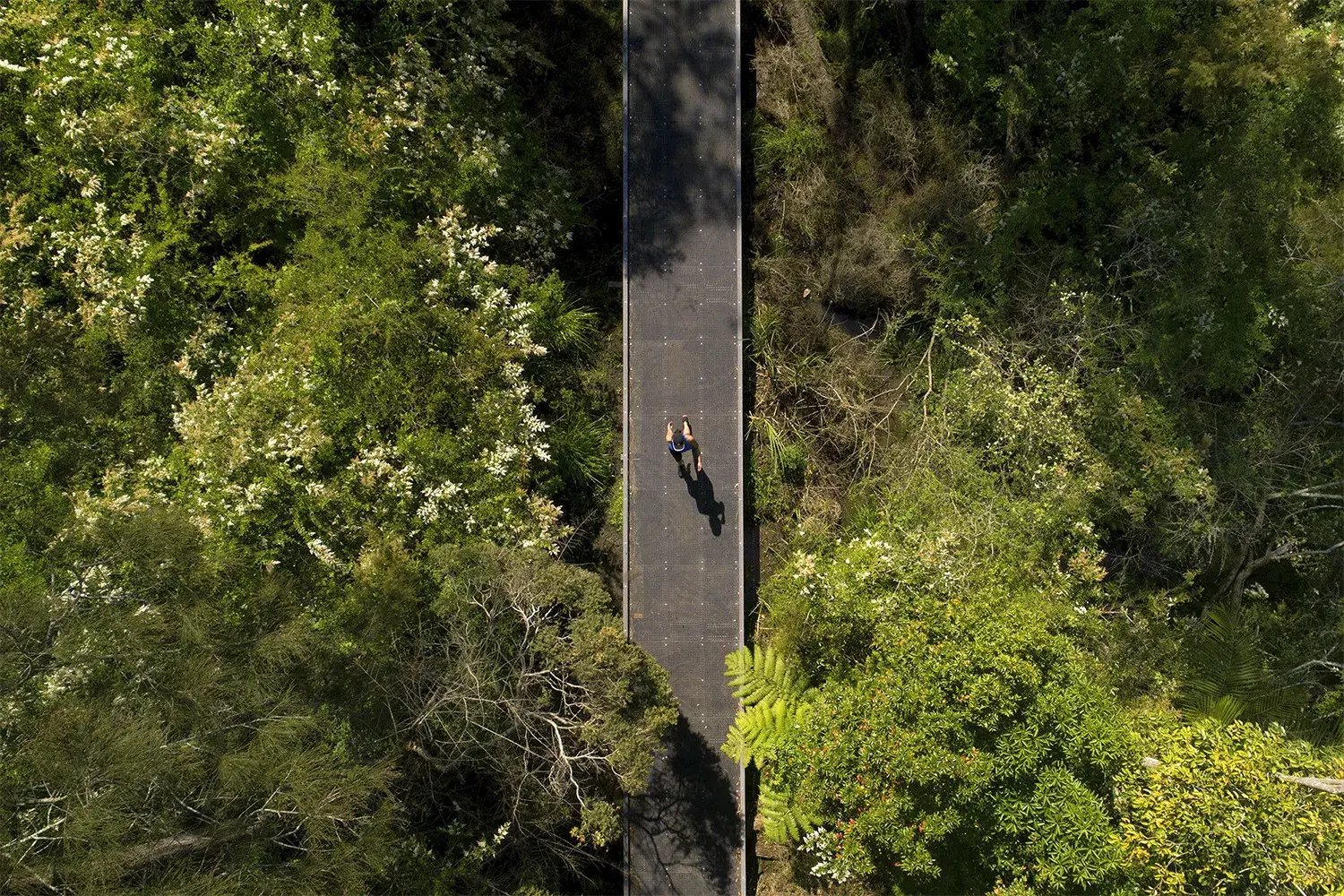
Fibre reinforced polymer (FRP) is a commonly used material for boardwalk construction in Australia. Correctly designed and specified it provides excellent performance and project outcomes. Any risk with FRP almost always comes from misapplication, incorrect specification or poor design, not material failure. For example, choosing FRP - or any other material - based purely on past experience without consideration of the specific project site and needs is typically where materiality mistakes are made. The cost of such decisions is typically felt later through increased maintenance and reduced operational lifespan. FRP is ideally suited to many boardwalk projects in Australia with particular benefits in coastal, high moisture and high load environments. As with any material choices, lifecycle project thinking is critical in order to balance upfront design and installation costs with longer term obligations relating to maintenance. FORGE brings decades of experience working with FRP and can help you make informed decisions long before contracts and designs are locked in.
Smarter Material Selection for Longer-Lasting Boardwalks
Material selection is critical in the successful delivery of boardwalks in Australian communities. Whether specifying FRP composites, hardwood timber or even hybrid systems, councils, landscape architects, engineers, architects, developers, contractors and asset managers must carefully assess all project and site variables to ensure these vital access structures meet all operational and budgetary requirements while maximising safety for users and design life. Correctly designed and specified, FRP boardwalks can perform brilliantly for many decades. The key is making the right, informed choice for each individual project.
Specifying FRP for Better Boardwalk Outcomes
Fibre reinforced polymer (FRP) is a proven and widely used material for boardwalk construction. Increasingly specified on projects across Australia, every application is different so it’s essential to ensure it is the right material for your specific project and site. This is because the risk in boardwalk construction isn’t from material failure. It comes from poor design and misapplication, which is why FORGE partners closely with clients to ensure the right, informed up-front decisions are made for every boardwalk project.
Better understanding drives better project outcomes
It’s important to avoid locking in material choices before a thorough site and project assessment has been completed. This is essential in order to understand traffic loads, environmental conditions and ongoing maintenance commitments all within the context of the project budget. Without this vital information key decisions can be unevenly influenced by aesthetics, familiarity or simply what was used previously. Doing so can lead to unwanted consequences in years to come including unforeseen maintenance bills, compliance concerns and significantly reduced operational lifespan.
Where FRP typically performs best
There are many types of FRP on the market with different grades possessing very different properties. When correctly designed, specified and detailed, FRP boardwalks typically perform well in coastal, high-moisture and corrosive conditions. FRP doesn’t rot or splinter or corrode, while in flood-prone or tidal areas it handles repeated inundation without structural degradation. In bushfire-affected regions, its fire resistance properties often mean less post-event remediation and a faster return to service.
Whole-of-life cost
It’s easy to focus on upfront costs, but lifecycle cost is the full story for any boardwalk structure. When you factor in inspection schedules, surface treatments, section replacements and compliance upgrades over a 25+ year asset life, the material that looked expensive at tender could prove to be the more economical choice. It’s a conversation worth having early long before contracts are signed and designs are locked in. FORGE brings extensive experience across all material options for boardwalks including FRP. We don’t advocate for one material over the other, rather we advocate making the right decision for your unique project.
Key Considerations
When considering the use of fibre-reinforced polymer (FRP) for a boardwalk, several key factors should be used to guide the decision beyond the upfront cost.
FRP resists rot, insects and UV degradation, offering a design life of 50+ years with minimal deterioration.
FRP requires little ongoing maintenance beyond periodic inspections and cleaning.
FRP decking can be manufactured with anti-slip surfaces that retain performance even when wet.
FRP is a non-corrosive material making it well-suited to marine and coastal environments, however careful attention still needs to be given to structural connections and fixings.
FRP is strong yet lightweight, simplifying installation and often reducing the need for heavy machinery in remote and hard-to-access locations.
When designed, specified and detailed correctly FRP structures can meet all relevant Australian Standards (e.g. AS 1428, AS 4586).
FRP is energy-intensive to manufacture but its longevity typically reduces resource consumption over the life of the asset.
How FORGE helps you choose the right boardwalk material
FORGE brings over 50 years of expertise delivering high-quality boardwalks across some of Australia’s most demanding environments, from sensitive tidal wetlands and mangrove systems to remote rainforests and bushfire-prone communities, giving us a deep understanding of the use of FRP as a key structural material.
Our proven boardwalk solutions are designed, engineered and specified with material selection at the centre of the process. Whether your site demands the corrosion resistance and low maintenance of FRP or the natural warmth of hardwood timber, we assess the unique forces at play including salt, sand and wind exposure, tidal forces, debris loading, erosion, prolonged inundation and heavy pedestrian traffic, to ensure the specified materials deliver structural integrity without compromise for years to come.
By combining an experienced in-house team with our early contractor engagement model, FORGE works collaboratively with councils, landscape architects and developers to validate material choices through a cost, durability, maintenance and risk-informed lens before work ever begins on site.
The right material, selected early and for the right reasons, means fewer surprises, a better outcome for your budget and a boardwalk your community will enjoy for decades to come.
Projects
Year after year, the FORGE Methodology delivers greater design clarity to high-profile outdoor infrastructure projects across Australia. Here are just some of the projects that have benefited directly by beginning with our Design Scoping Package™.
- M6 Stage 1 Boardwalks
- Dobroyd Head Walking Track
- Glen Innes Skywalk
- Sydenham Park Boardwalks
- Bokarina Wetland and Riparian Corridor Boardwalk
- Ryde River Walk Baordwalk
- Narrabeen Lagoon Trail
- Jibbon Head
- Field of Mars Reserve Boardwalks
-
M6 Stage 1 Boardwalks
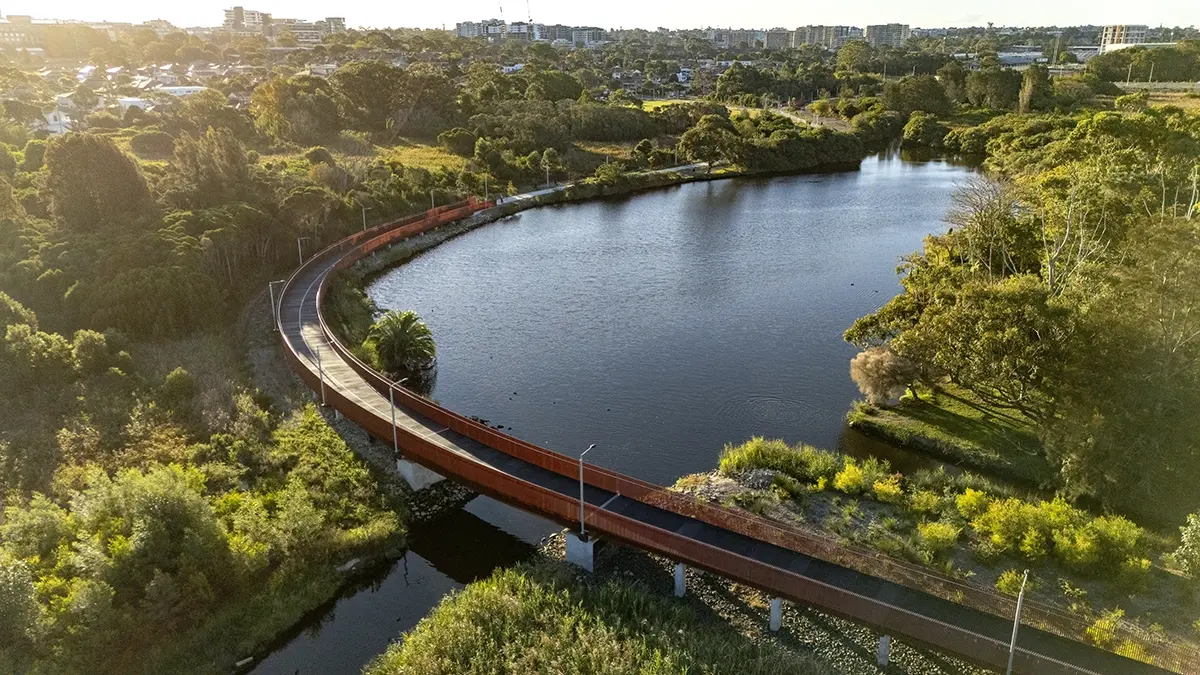
FORGE was engaged under the CPB Ghella UGL Joint Venture to deliver eight critical community access structures as part of the wider M6 Motorway Stage 1 project for Transport for NSW—designated as state-significant infrastructure by the NSW Government.
In addition to a network of multi-lane road links and tunnels, the M6 project called for six shared boardwalks and one new bridge to be installed along an adjacent Active Transport Corridor to reconnect local communities that had historically been separated by poor pedestrian and cycling access links. -
Dobroyd Head Walking Track
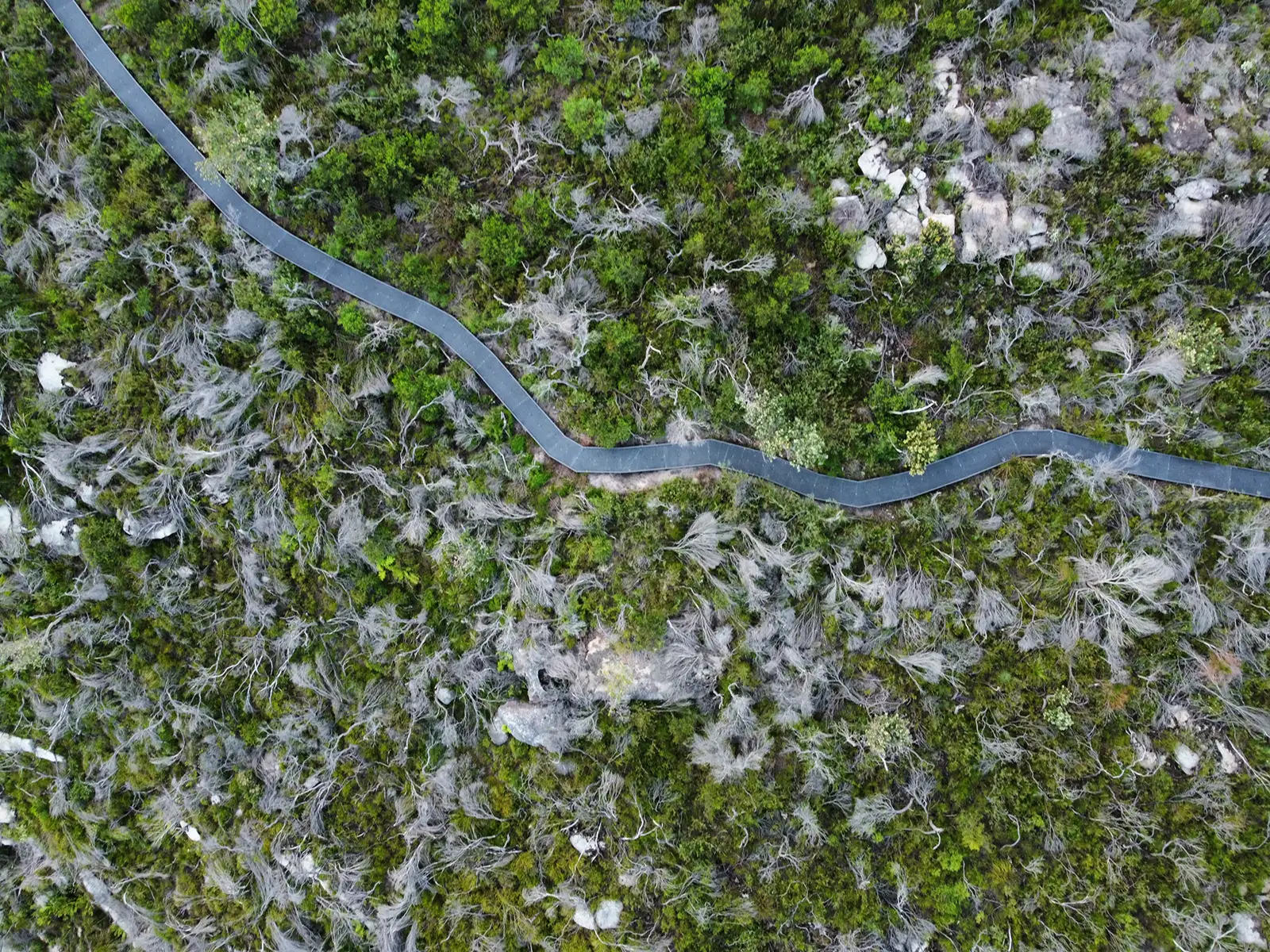
Located in Sydney Harbour National Park, Dobroyd Head marks the exact halfway point along the spectacular Spit to Manly Coastal Walk.
With several sections of the popular track in disrepair, locals were concerned about its safety – particularly with the increased volume of people using it for exercise during the pandemic. -
Glen Innes Skywalk
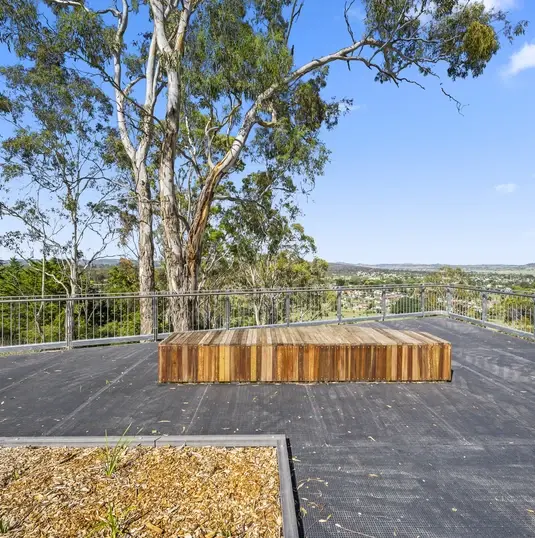
Glen Innes Severn Council was seeking to deliver a series of high-profile community infrastructure upgrades as part of its Centennial Parklands Master Concept Plan. FORGE (formerly Fleetwood Urban) was engaged to design and deliver one of the most anticipated new elements: a spectacular public ‘skywalk’ providing uninterrupted views of Glen Innes township and the picturesque Northern Tablelands.
Stretching 80 metres from end to end, a network of customised raised boardwalks and all-access viewing platforms was created based on our proprietary Waterside system.
-
Sydenham Park Boardwalks
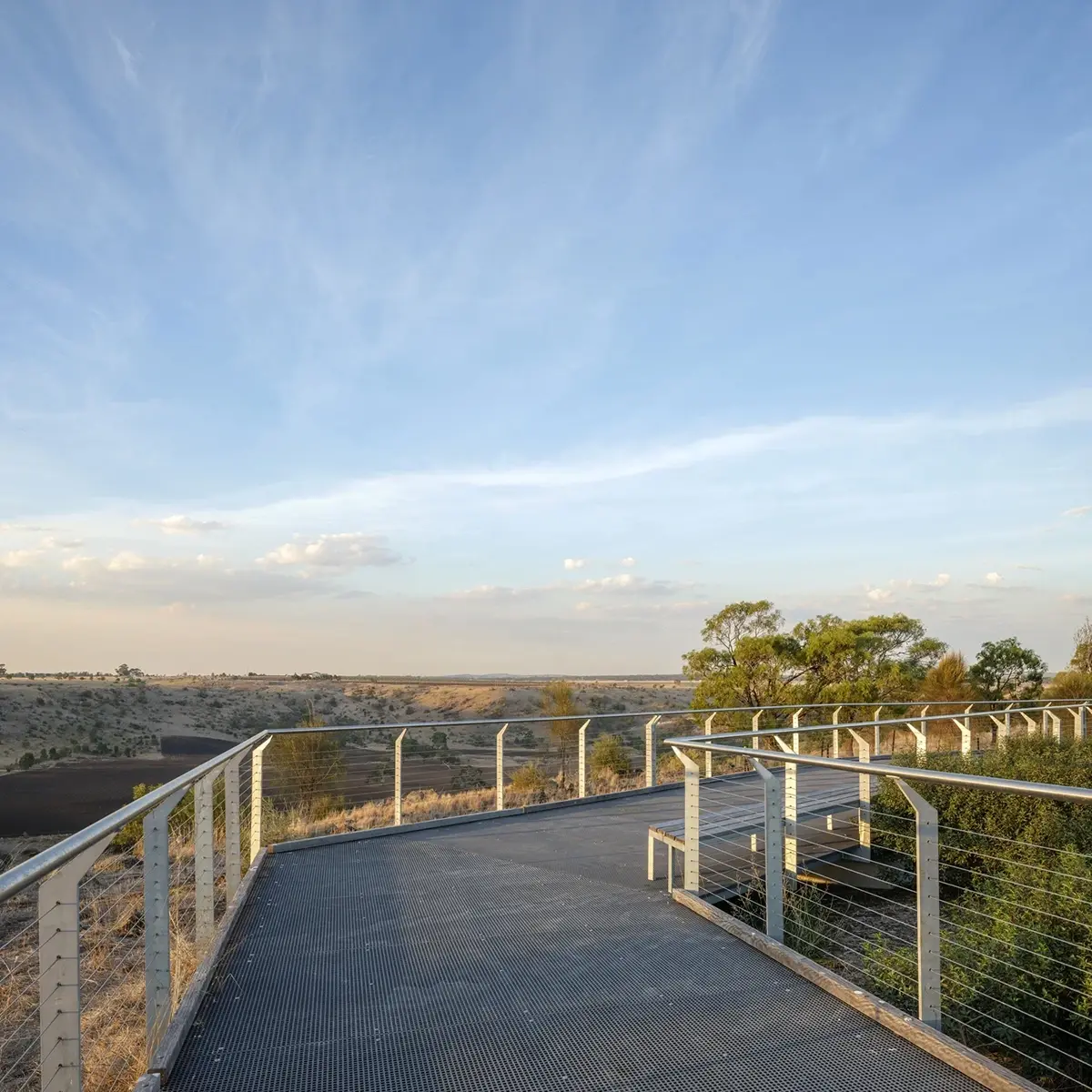
Sydenham Park is a 231-hectare reserve in Keilor North, 30km north-west of the Melbourne CBD. Brimbank City Council wanted to enhance recreational access for cyclists, pedestrians and joggers as part of their wider Sydenham Park Master Plan, but it was also essential to preserve the native skink population.
To achieve both outcomes, FORGE was appointed following a closed tender to design, construct and install nine ‘wildlife’ boardwalks and a public viewing platform. The result was a network of lightweight, highly durable FRP-based structures that allows easy access for local residents – and safe passage for the local skinks and other small wildlife as they migrate through the reserve. -
Bokarina Wetland and Riparian Corridor Boardwalk
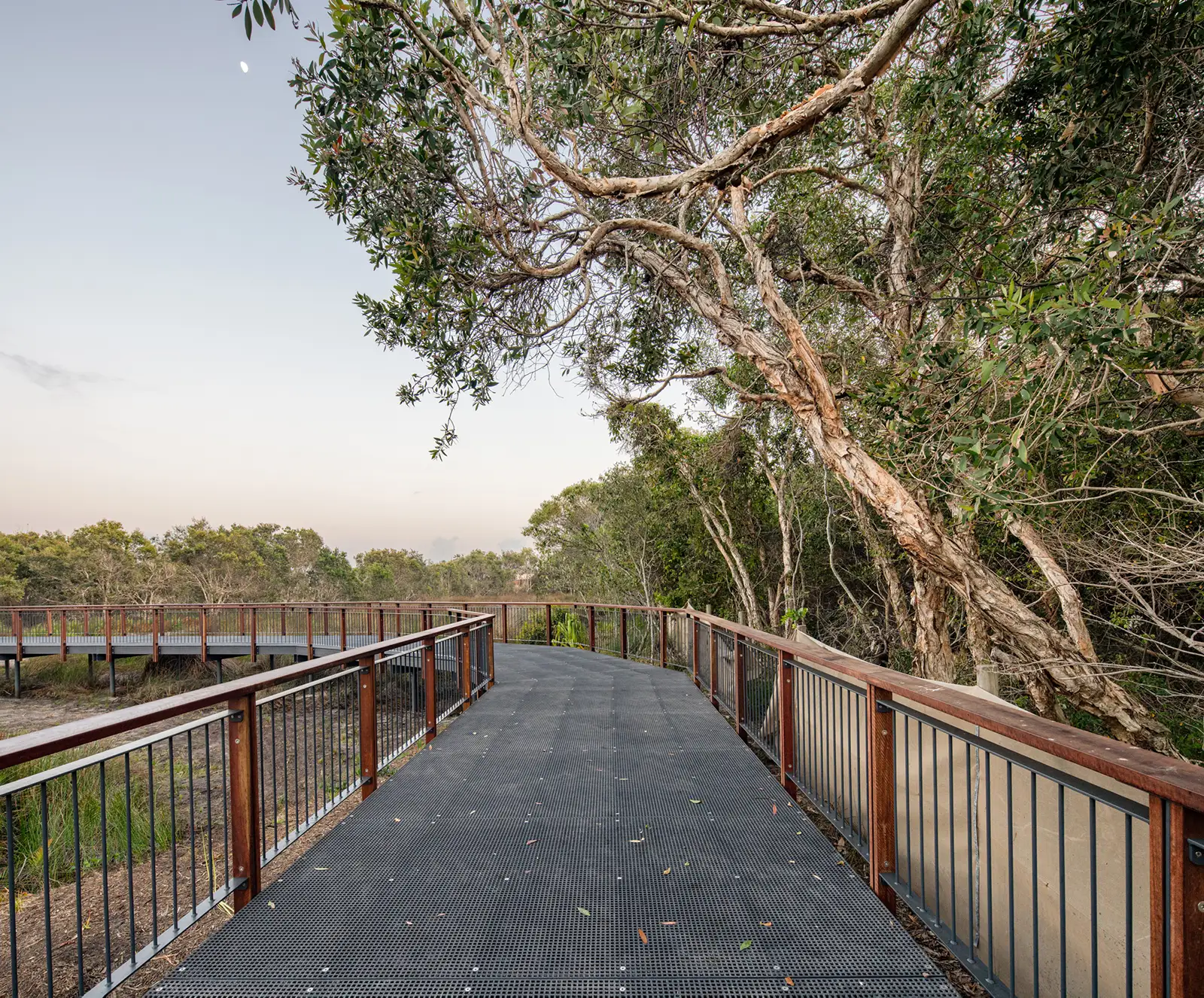
Bokarina Beach is a premium 30-hectare residential community overlooking Lake Kawana on the Sunshine Coast. The developers, Stockland, selected FORGE (formerly Fleetwood Urban) to collaborate on the design and construction of several key elements within the community’s expansive parklands, including a series of contemporary shelters and an environmentally-sensitive walkway allowing locals to explore the natural beauty of the surrounding local wetlands.
-
Ryde River Walk Baordwalk
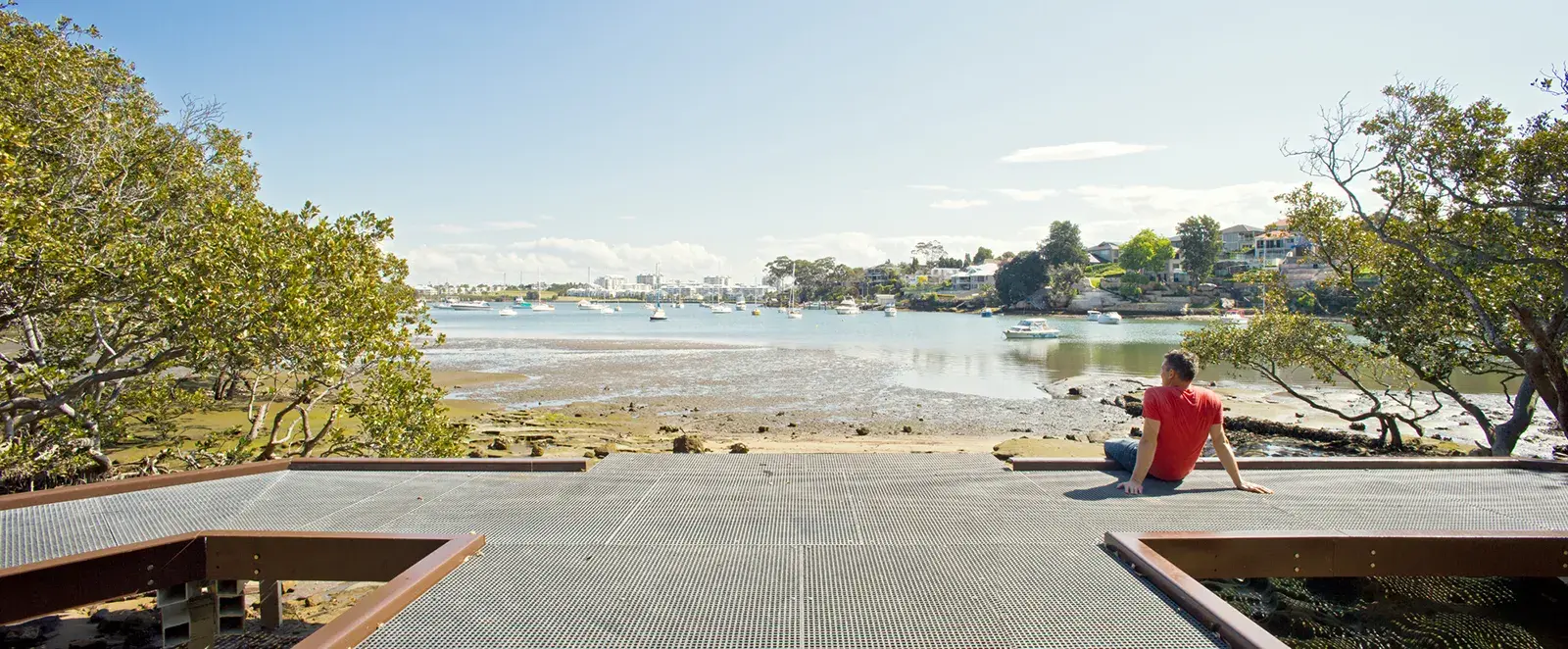
Stretching 10km from end to end, the Ryde River Walk is a popular pedestrian and cycle route following the Parramatta River from Gladesville Bridge to Ryde Bridge in Sydney.
FORGE (formerly Fleetwood Urban) was engaged by the project’s landscape contractor following a successful tender to the City of Ryde Council, who was looking to upgrade access to the Walk and provide a more seamless journey through the addition of several new boardwalk sections that connected directly with existing concrete paths. -
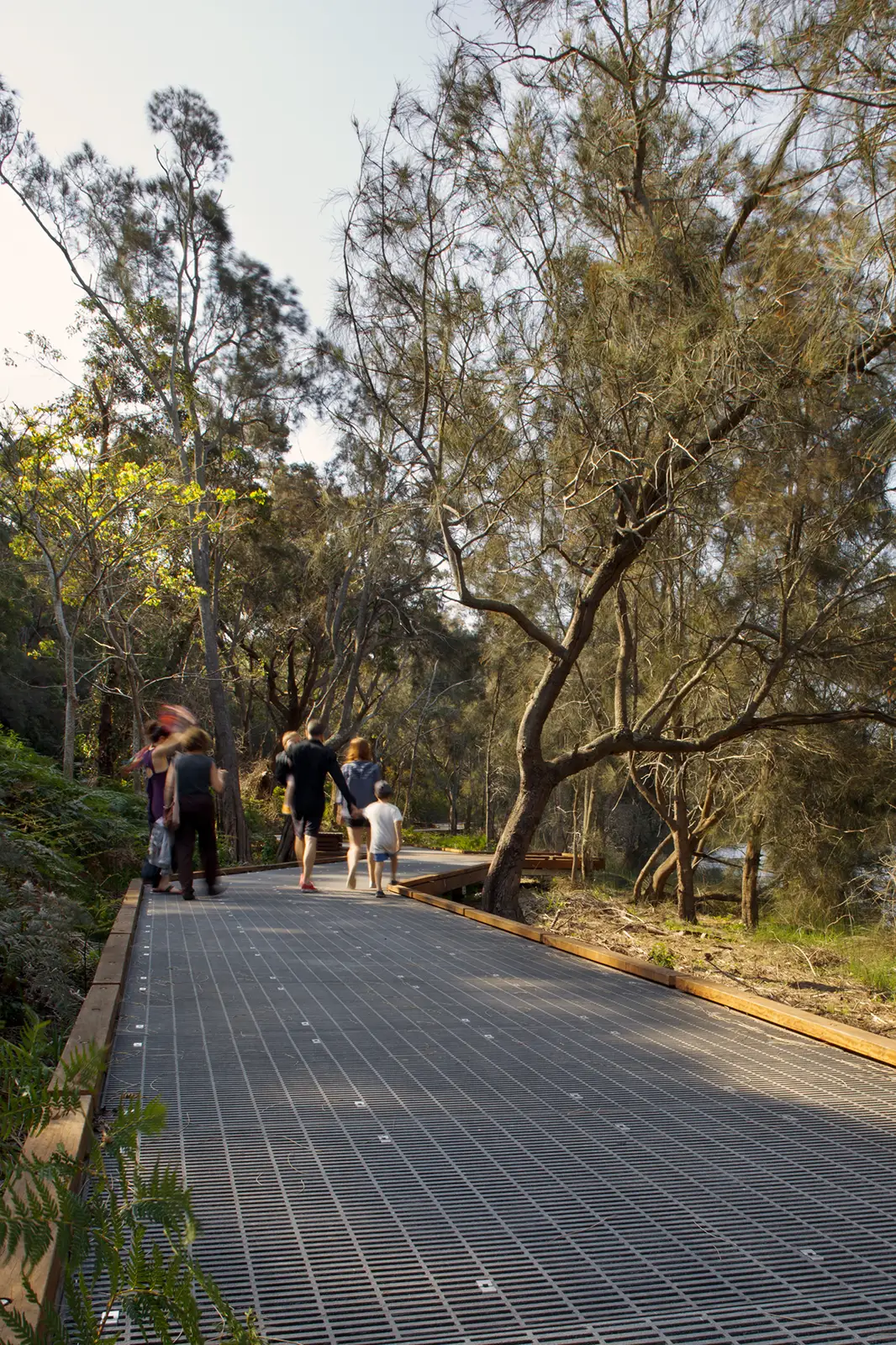
Narrabeen Lagoon Trail
The Narrabeen Lagoon Trail is a high profile shared pathway on Sydney’s northern beaches. It weaves its way through a beautiful, but environmentally sensitive, habitat on the fringes of one of Australia’s most populous and affluent residential regions.
FORGE (formerly Fleetwood Urban) won a competitive tender with Northern Beaches Council (formerly Warringah Council) to complete the 850 metre first stage of the trail’s upgrade, including marine piling, elevated boardwalks, stairs, lookouts, custom furniture and landscaping. -
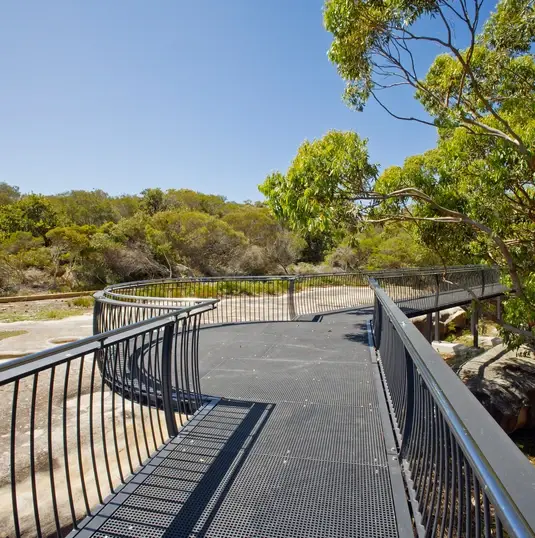
Jibbon Head
Located within the Royal National Park, south of Sydney, the Aboriginal engravings at Jibbon Headland have long been a popular location for the public to appreciate the cultural heritage of the local Dharawal people. However, increasing visitor numbers had contributed to its deterioration, with erosion and abrasion putting the preservation of the engravings at risk.
Identified by the NSW Office of Environment and Heritage and the National Park and Wildlife Service (NPWS) as an important landmark on the Royal Coast Track, FORGE (formerly Fleetwood Urban) was engaged to construct a new viewing platform and walkway that would provide urgent protection to the area, whilst still allowing adequate public access to the unique cultural site. -
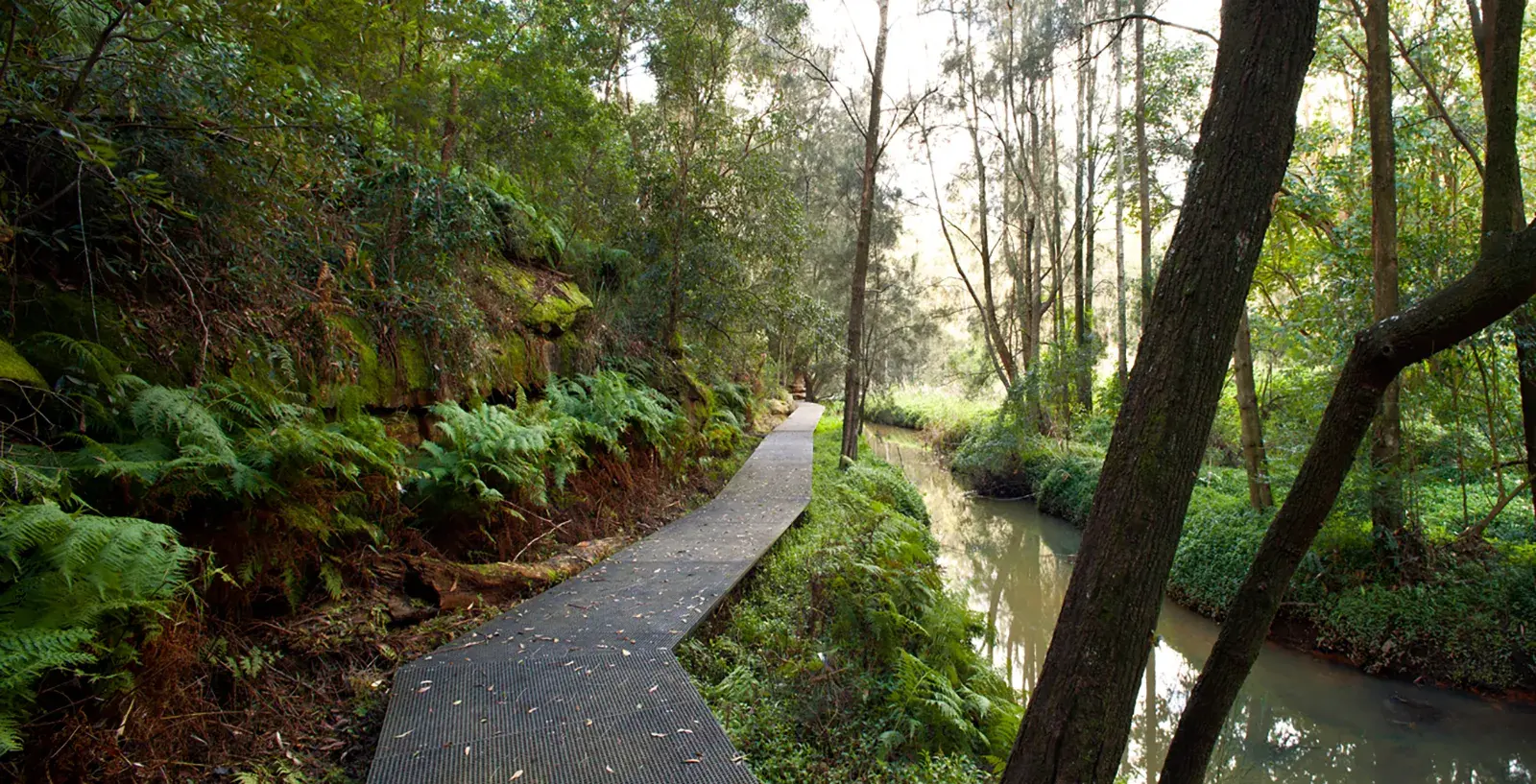
Field of Mars Reserve Boardwalks
The City of Ryde Council choose FORGE (formerly Fleetwood Urban) as their sole construction partner, based on a proven track record of delivering similarly complex solutions within sensitive surrounds.
Guided by our proprietary project methodology, our involvement began with brainstorming sessions involving Design-Led Engineers and Structural Specialists. From here the MARS Boardwalk System was identified as the most suitable construction solution, with a series of prototypes developed to test materiality and construction techniques prior to full-scale installation.
Your Questions Answered
FAQ
FAQ
-
What material performs better for Australian boardwalks: FRP or hardwood timber?
There is no single answer to this question. Both fibre reinforced polymer (FRP) and sustainably sourced hardwood timber can deliver outstanding performance in boardwalk applications, as can hybrid solutions that feature both. Every boardwalk needs to be specified with materials that are fit-for-purpose, considering the unique requirements of the site, structure and budget.
-
What materials does FORGE recommend using for boardwalks?
Every boardwalk project is unique, and the materials chosen will have far-reaching implications for performance, cost, safety and longevity. While FORGE works with a wide range of materials for boardwalk projects, the two most common choices are fibre reinforced polymer (FRP) composite systems and sustainably sourced Class 1 Australian hardwood timber.
-
Are all FRP products the same?
No. There are many different types and grades of FRP products available in Australia and they can look and behave very differently over time, making correct specification essential. FORGE is highly experienced at designing FRP boardwalks and can bring a deep understanding of the unique visual and structural characteristics required for your FRP boardwalk project.
-
How do local conditions influence design and material choice?
Site conditions play a significant role in the design and material specification of any boardwalk, particularly in terms of maximising design life and meeting all necessary sustainability benchmarks. The site and surrounding environment will typically have quite a direct influence on the overall type of structure recommended and can also have a very direct influence on the selection of materials and fittings. It’s essentially that every boardwalk is fit-for-purpose.
-
Can FORGE construct boardwalks in environmentally sensitive areas?
FORGE has extensive experience in designing and constructing boardwalks in environmentally sensitive and protected habitats. Great care is always taken to ensure the structure has the lightest possible environmental footprint and is able to be installed with little (or even no) use of machinery. Some of our most impressive projects were entirely constructed by hand, including manually-driven piles and materials that were carried to the site on foot.
-
Can boardwalks be prefabricated off-site for quicker installation?
Yes they can, and in many cases that’s exactly what we recommend and do. By intentionally designing boardwalks in modular form, the main structural elements can often be fully or partially pre-assembled in controlled conditions off-site, maximising quality while also minimising installation time. The result is greater savings, better outcomes and reduced community disruption.
-
What maintenance considerations are important for boardwalks?
Every boardwalk will have its own maintenance requirements to help maximise its design life based on its location, usage, design and materials. FORGE provides full maintenance recommendations and scheduling guides at the final handover. Many of our clients choose to manage this themselves, however ongoing maintenance arrangements can be negotiated on a project-by-project basis.
Contact
FORGE is an Australian leader in the design, detailing and delivery of boardwalks and access structures. With deep expertise across all material options, including FRP, we guide councils, landscape architects and developers through one of the most consequential material decisions in any boardwalk project - identifying the solutions that best balance aesthetic appeal, long-term value and performance in even the harshest of environments.
To discuss your upcoming boardwalk project with the specialist FORGE access team, please get in touch today.