
The changing way access structures are designed in Australia
If you ever wanted a snapshot of where outdoor access infrastructure is heading in Australia the 2026 Small Bridges Conference at the Adelaide Convention Centre was an excellent place to get it.
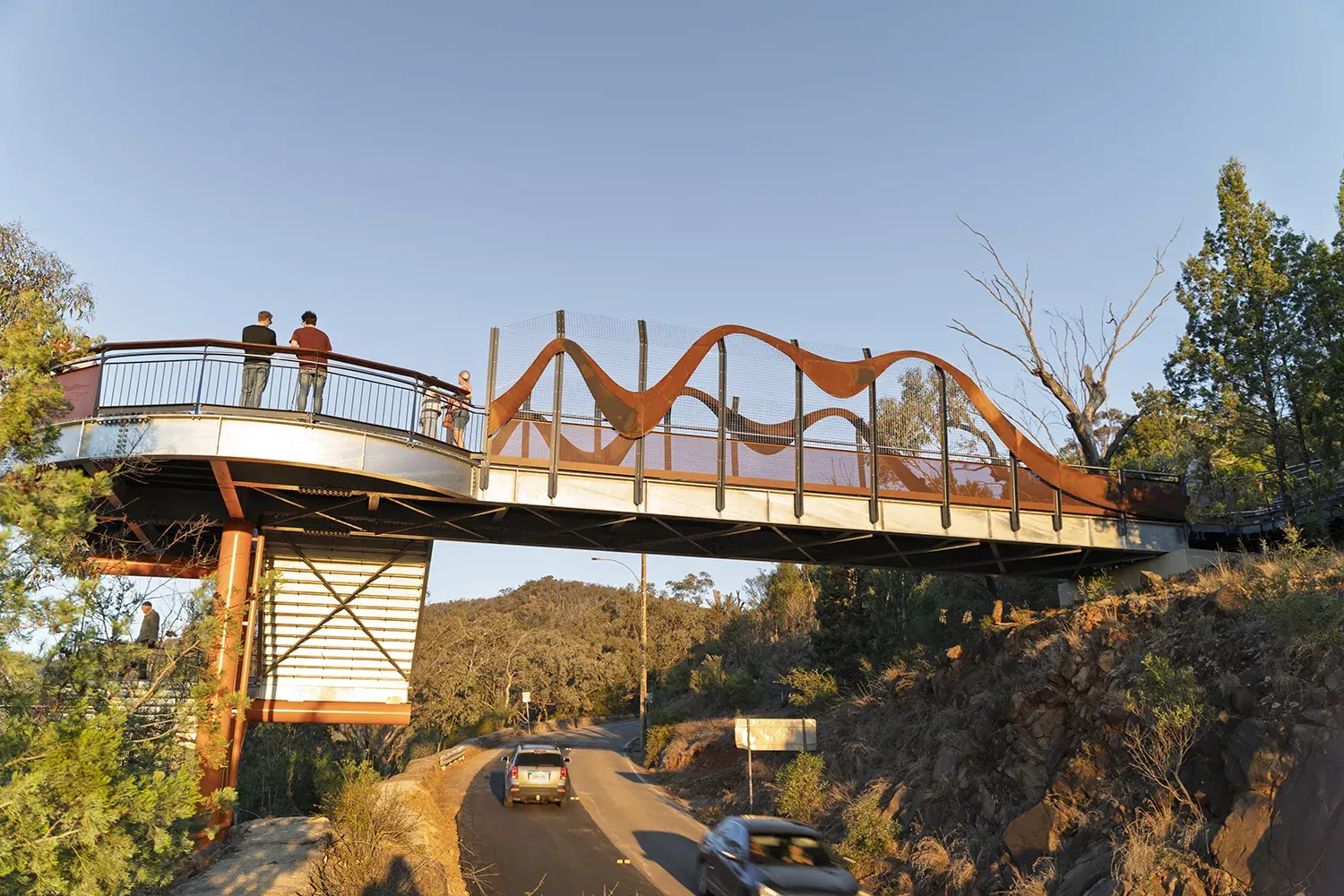
One of the largest conferences of its type, FORGE Director Ian Joyce recently had the opportunity to share the stage with Project Engineer Lachlan Mackiewicz from Tamworth Regional Council, helping to present some of the key learnings from the recently-completed Tamworth Skywalk project.
This year's event hosted more than 400 engineers, councils and suppliers from across Australia and beyond. As always, there was a huge array of project presentations and innovations on show, covering everything from materials and construction methods to community engagement and long-term maintenance planning.
But there was one theme that kept surfacing session after session: the traditional design development process for outdoor infrastructure is being challenged.
The continued rise of early engagement thinking
For many years, the standard approach to delivering community infrastructure projects such as bridges, skywalks, boardwalks, cycleways and even viewing platforms, has followed a traditional linear path. A client engages an engineer, the engineer works through full design documentation, and only once that's locked in does the project go out to tender.
On the surface it makes sense. This approach gives clients a clear document to take to market and a sense that the critical thinking has already been done before external contractors begin pricing the job.
The trouble is, in the real world it often falls down. Assumptions, errors and unforeseen risks can frequently undermine the project budget, timeline and outcome once work begins, and that's precisely why the thinking shift was so visible at this year's conference
"Across the conference there was a real focus on changing approach to design," said FORGE Director Ian Joyce on his return from several days in Adelaide.
"Where in the past clients have tended to engage with an engineer and seen through full design documentation before going out to market and getting contractors involved as early as possible."
As most at the conference acknowledged, this change isn't about making a small tweak to procurement paperwork. It represents a major rethink of who should be in the room as a project moves from concept to construction and when contractor conversations should actually be happening.
Different clients reaching the same conclusion
According to Ian, what made the conference particularly interesting wasn't just that early engagement was being discussed, it's that it kept coming up independently, across projects and clients that had no direct connection to one another. Different councils, different consultants and different regions all arriving at a similar conclusion through their own project experience.
For FORGE, it's a welcome validation. Early-engagement thinking is something we've built into our own methodology for a long time now. Hearing other industry leaders land in the same place, from their own separate paths, was a genuinely encouraging sign that the industry is converging on something that is genuinely better for all project stakeholders.
"In quite a few of the project case studies that were presented it was all about how the designers worked very closely with contractors, like FORGE, to come up with a better idea or a better end solution for the project that delivered even greater community and client value," Ian Joyce says.
"There was quite a theme around that which was very pleasing to see given it's something we've been championing for many years now at FORGE."
"It isn't just about contractors simply being consulted for feedback on a finished design either," he added. "It's about designers and contractors working side-by-side earlier in the process so buildability, materials, staging and site conditions are all being weighed up at the same time as the design itself is taking shape. That's powerful."
What's actually driving the change?
Behind this shift in process is a shift in what clients actually want and value, something we've seen first-hand here at FORGE over the past decade. Councils and asset owners are increasingly looking for greater certainty and confidence before they commit to community access projects, and it's not hard to understand why. These projects are expensive, they're highly visible and they often carry years of community expectation long after the opening ribbon has been cut. Getting things wrong isn't just a budget problem, it can be a long-term reputational one.
Early engagement addresses this directly. When designers and contractors are working through a project together from an earlier point several key things happen:
- Clarity improves. Deliverables, scheduling and budgets become clearer earlier because the people who actually have to deliver the project are involved in shaping how it gets built.
- Risks are identified sooner. Site-specific issues, access constraints and material considerations show up during design rather than after the tender has been awarded.
- Variations reduce. A lot of the friction that shows up midway through a build traces back to decisions that were locked in without enough input from the people delivering the work.
- Quality outcomes improve. When a contractor's practical knowledge feeds into the initial design the finished structure tends to reflect a better balance of design intent and real-world constructbaility.
- Stakeholders end up happier. Fewer surprises during construction generally mean a smoother project for everyone involved, including the communities who'll actually be using the structure for decades to come.
What does the future of access projects look like?
Rather than a niche approach championed by a handful of contractors with a particular way of doing things, early engagement is fast becoming the expected way of delivering community projects. The conversations at this year's Conference made that clearer than ever.
"Absolutely, that's the general language that's going on out there and it's only getting louder and louder," Ian Joyce says, highlighting that projects like the Tamworth Skywalk are a fantastic example of what's possible when asset owners, designers, engineers and specialist contractors are aligned from an early stage.
"It's a proven methodology that we know drives better results. Based on our direct experiences at FORGE it also means fewer surprises along the way so clients can be more confident in what they're getting long before the contracts are awarded or soil gets turned on site."
As more of the industry moves towards early engagement models, the projects that deliver the next way of access structures in Australian communities will be better for it. Based on what we saw and heard in Adelaide this year, that shift is already well underway.

