Designing for sensitive sites means deeper thinking, tighter margins, and a careful balance of creativity, respect and environmental care.
“Life would be easy for designers if you could just ignore the cultural and environmental sensitivities of a site,” chuckles FORGE Creative & Technical Lead, Mark Jol. “You could just bulldoze everything and start from a blank page! But that’s not how we do things at FORGE.”
Of course, the reality is very different. Every project has unique characteristics and requirements that must be carefully considered, often significant ones. But, as Mark explains, these shouldn’t automatically force you to compromise on your project’s vision or outcome.
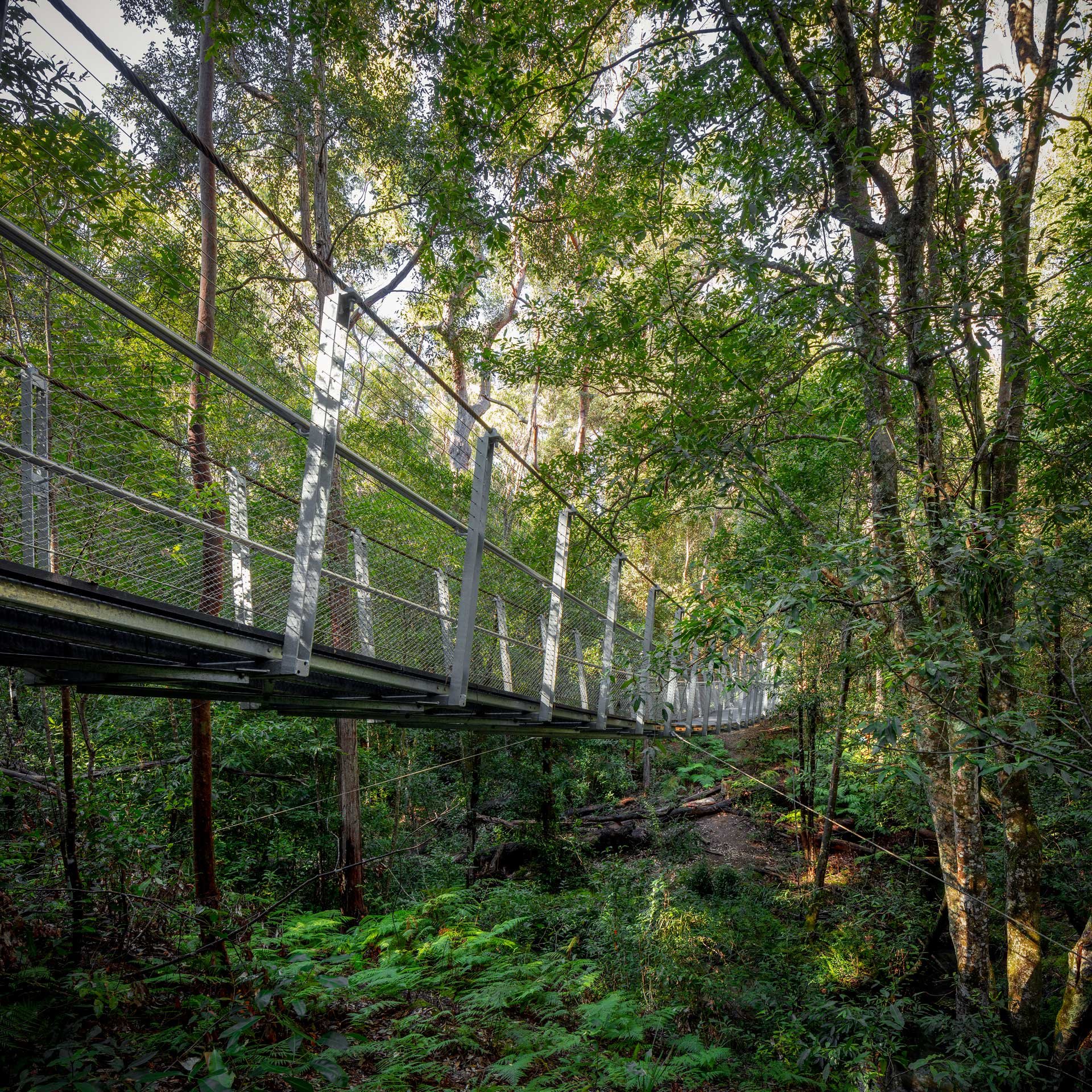
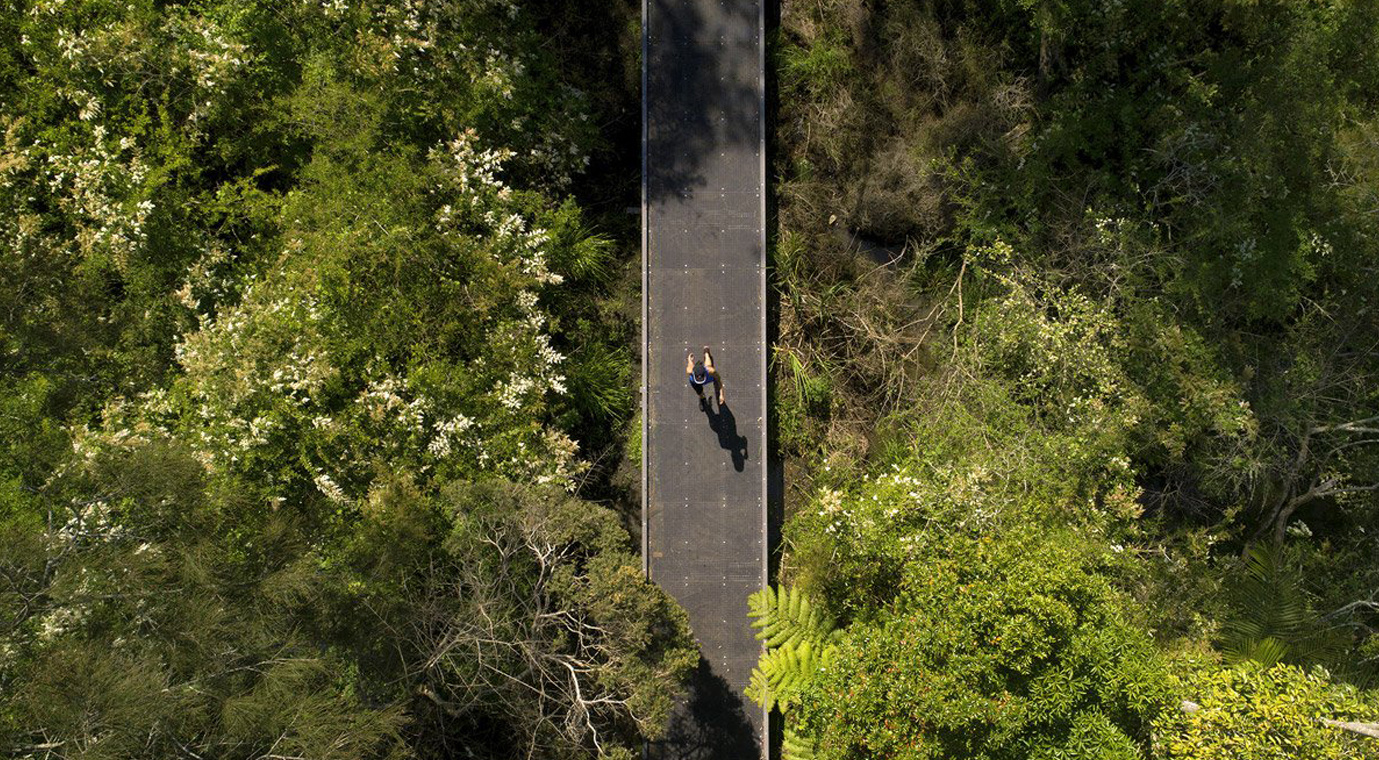
Above: Pyes Creek Swing Bridge, Cherrybrook NSW
Embracing the challenges of context.
“Sensitive sites can take many designers outside of their comfort zone. But it’s what FORGE does best,” says Mark Jol.
“Native flora and fauna. Indigenous and cultural heritage. Steep or unstable terrain. Even just the local neighbours. With decades of experience in managing all of these factors, our team has a tried and tested understanding of how they can influence the design, materiality and methodology of a successful project.”
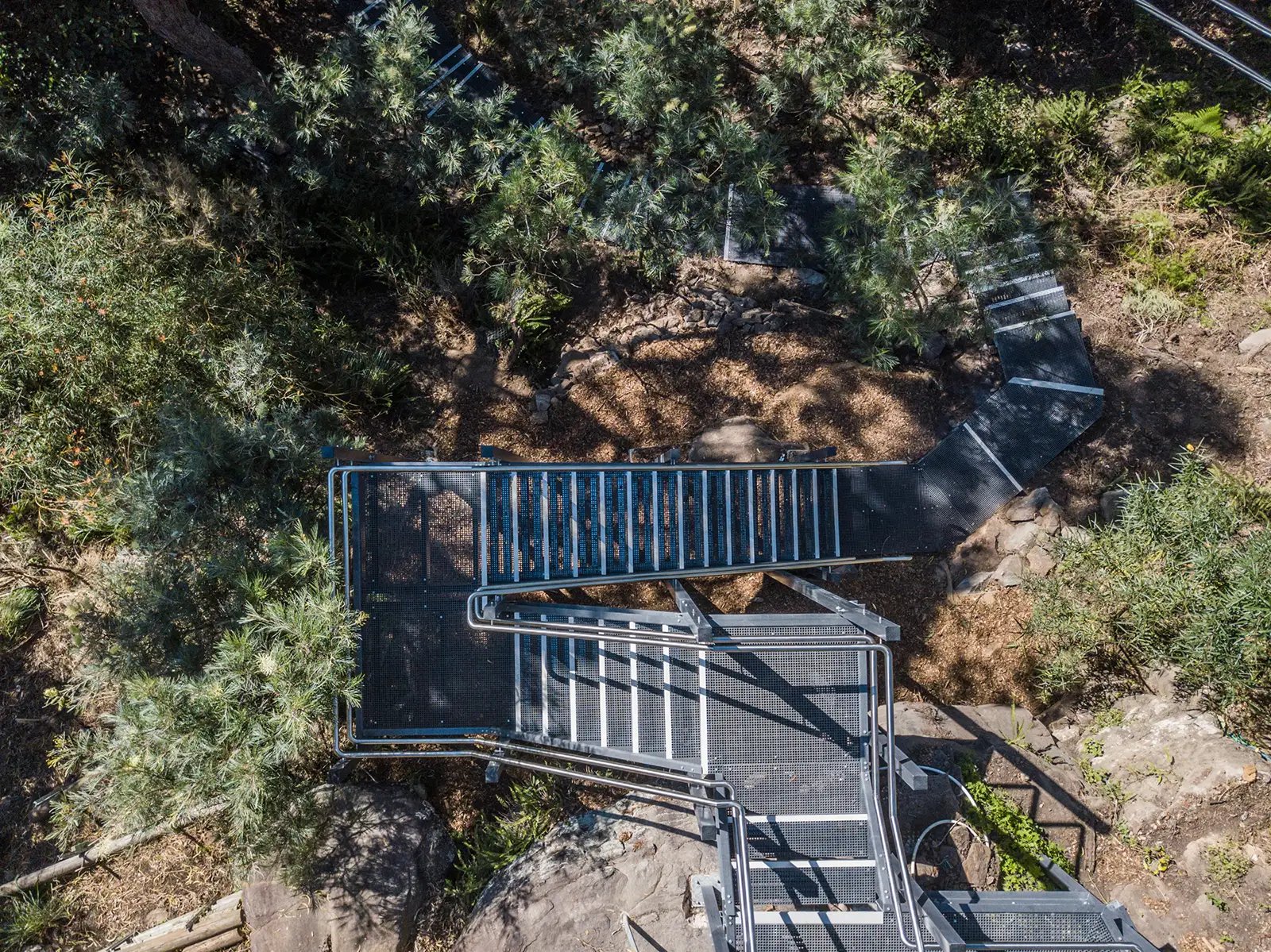
Above: Bayview Church Point Walkway, Church Point NSW
Light.. the way.
When it comes to delivering structures within sensitive locations, Mark explains the FORGE philosophy can be best summed in one word: ‘light’.
“Lightweight structures. Light carbon footprint. Light equipment. Light touch on the ground plane,” he says. “A lot of this comes down to the footings, of course. Lighter is almost always better. It means less core holes need to be drilled. Less concrete needs to be poured. Less machinery is required for the installation. Less community disruption, and so on.”
“It’s one of reasons our MARS boardwalk system continues to be so popular,” Mark continues. “It’s hugely versatile and has an extremely low environmental impact, with a proprietary piling system that can be driven by hand if required, making it ideal for use in fragile or marshy terrain, especially those with acid sulphate soils. There’s virtually no disruption to local ecosystems.”
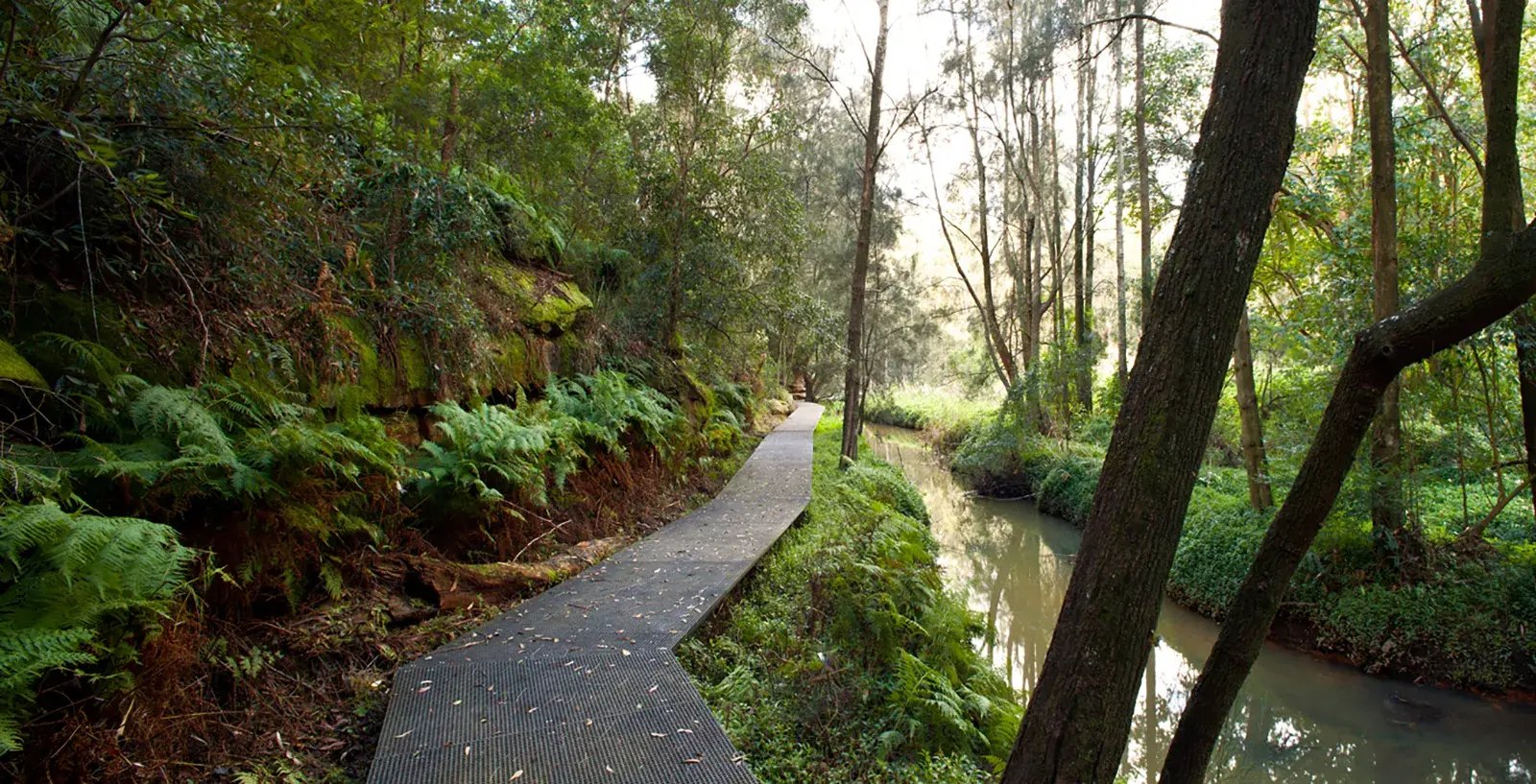
Above: Field of Mars Reserve, Ryde NSW
Bats, birds and flannel flowers.
During his 12+ years with FORGE, Mark has designed for countless projects with unique and sensitive site characteristics.
“We’ve installed custom-made ‘bat boxes’ to protect microbat populations. Adjusted construction methodologies to preserve native flannel flowers. Designed shelters in National Parks with open-ended galvanised tubes to encourage nesting by local bird populations. Reconfigured footbridges to reduce the risk of vibrations causing damage to nearby Indigenous artworks and cave paintings. There are hundreds of examples, it’s part of almost every project we work on – as it should be!”
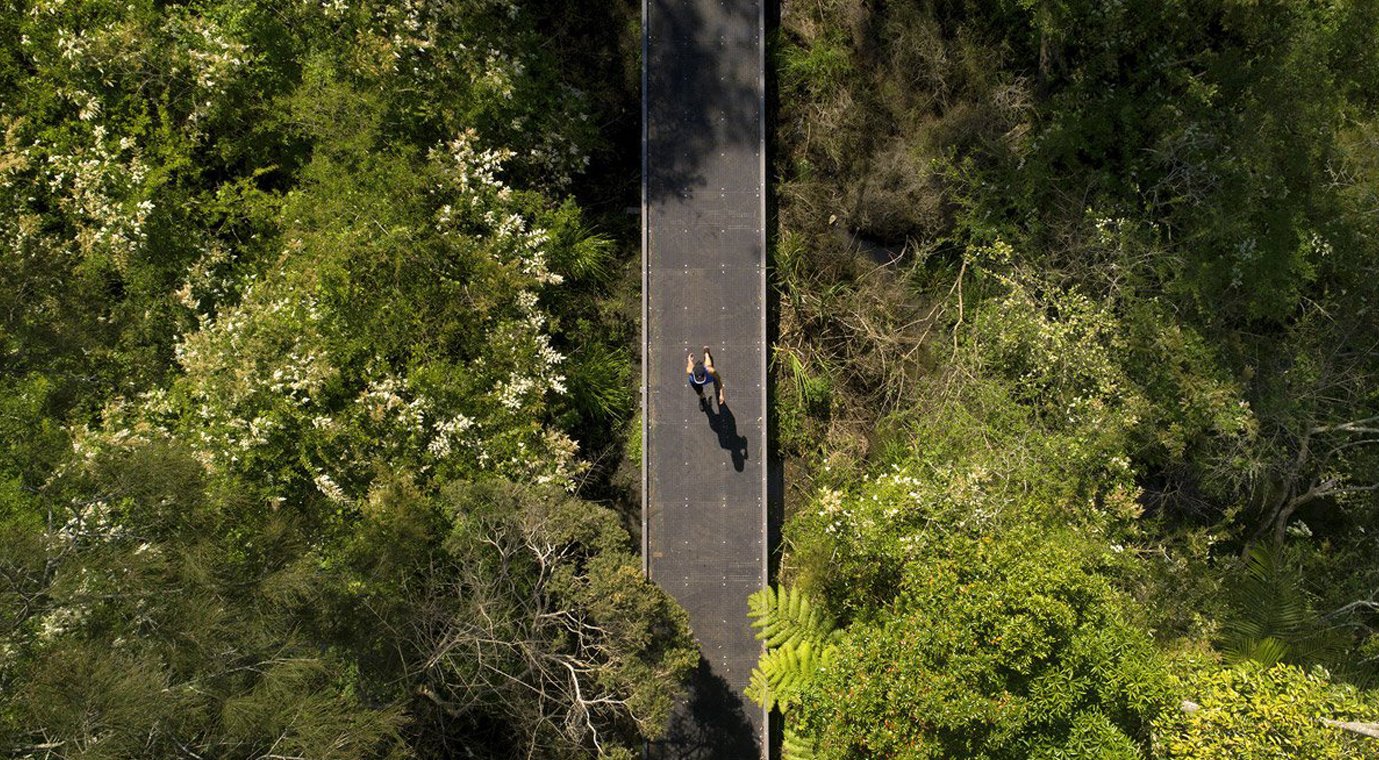
Above: Myles Dunphy Reserve, Oatley NSW